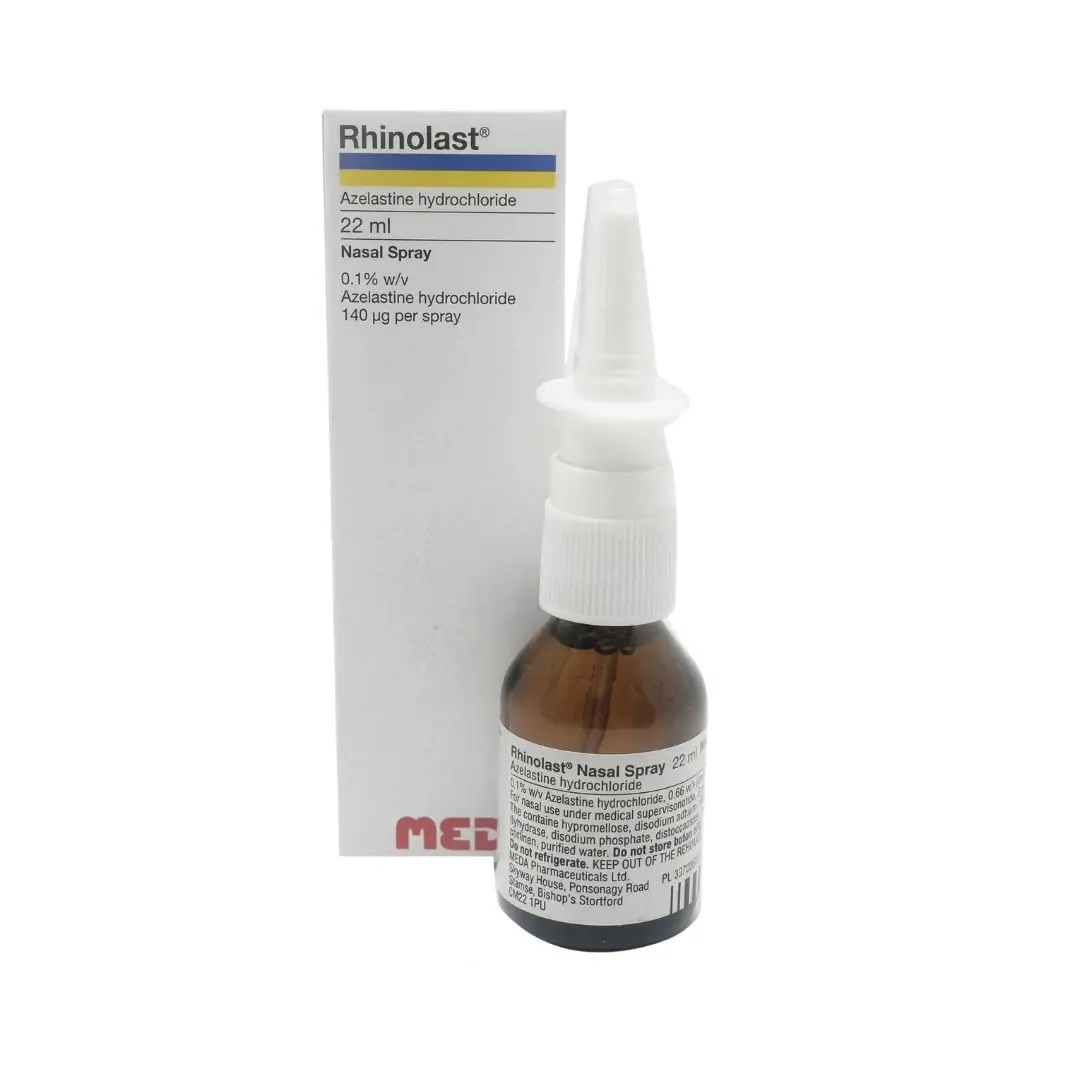
Rhinolast is an antihistamine nasal spray containing azelastine hydrochloride. It is used to relieve symptoms of allergic rhinitis, including seasonal hay fever and other nasal allergies. By acting directly inside the nose, Rhinolast can help reduce allergy symptoms such as:
Sneezing
Runny nose
Itchy nose
Nasal irritation
Blocked or congested nose
Azelastine works by blocking the effects of histamine, a natural substance released by the body during an allergic reaction.
£19.99
Your Health &Wellness Centre
Trusted pharmacy advice, tips and guides for all your healthcare needs
Rhinolast is an antihistamine nasal spray used to relieve symptoms of allergic rhinitis, including seasonal hay fever and year-round nasal allergies.
It is applied directly inside the nose, where it helps manage common allergy symptoms such as:
Sneezing
Runny nose
Itchy or irritated nose
Nasal congestion
Discomfort caused by allergic rhinitis
Rhinolast may be used for allergies triggered by substances such as pollen, house dust mites, animal dander and other airborne allergens.
How Does Rhinolast Work?
Rhinolast contains azelastine hydrochloride, an antihistamine medicine.
During an allergic reaction, the body releases a substance called histamine. Histamine contributes to symptoms such as sneezing, itching, nasal irritation and a runny nose.
Azelastine works by blocking the effects of histamine and helping reduce the allergic response within the nasal passages.
Because Rhinolast is administered directly into the nose, the medicine acts at the area where many allergic rhinitis symptoms occur.
What Is Rhinolast Used For?
Rhinolast can be used to manage:
Seasonal allergic rhinitis, including hay fever caused by pollen
Perennial allergic rhinitis, where symptoms may occur throughout the year because of triggers such as dust mites or animal allergens
The spray should be used regularly and according to the instructions provided with the medicine for the best control of allergy symptoms.
How Quickly Does Rhinolast Work?
Azelastine nasal spray can begin working relatively quickly after use, although individual response can vary.
Using Rhinolast consistently as directed can help control nasal allergy symptoms during periods of allergen exposure.
Do not use more than the recommended amount in an attempt to obtain faster relief.
Managing Allergies Alongside Rhinolast
In addition to using your nasal spray correctly, reducing exposure to known allergens may help manage allergic rhinitis.
Depending on your triggers, this may include:
Monitoring pollen levels during hay fever season
Keeping windows closed when pollen counts are high
Changing clothes after spending time outdoors
Reducing exposure to dust mites or animal allergens where practical
Important Information
Always use Rhinolast exactly as directed by your doctor, pharmacist or the patient information leaflet supplied with the medicine.
If your allergy symptoms remain uncontrolled, become more severe or change significantly, speak to a healthcare professional.
For advice about Rhinolast Nasal Spray, hay fever or allergic rhinitis treatment, speak to a qualified healthcare professional at Chesterfield Delivery Pharmacy.
Directions
How Should I Use Rhinolast Nasal Spray?
Always use Rhinolast exactly as directed by your doctor, pharmacist or according to the instructions in the patient information leaflet.
For adults and children aged 6 years and over, the usual dose is one spray into each nostril in the morning and one spray into each nostril in the evening.
Do not use more than the recommended amount unless specifically advised by a healthcare professional.
How to Prepare Rhinolast Before First Use
Before using Rhinolast for the first time:
Gently blow your nose to clear your nostrils.
Remove the protective cap from the bottle.
Hold the bottle upright.
Press the pump several times until an even spray is produced.
Once an even spray appears, the bottle is ready to use.
How to Apply Rhinolast Nasal Spray
Follow these steps each time you use Rhinolast:
Blow your nose gently before application.
Remove the protective cap.
Keep your head upright and do not tilt it backwards.
Insert the nozzle carefully into one nostril.
Press the pump once to release one measured spray.
Repeat the process in the other nostril.
Wipe the nozzle with a clean tissue after use.
Replace the protective cap securely.
Keeping your head upright is important, as tilting it backwards can cause the medicine to run into your throat and may result in an unpleasant taste.
Avoid Contact With the Eyes
Rhinolast is intended for use inside the nose only.
If the spray accidentally gets into your eyes, rinse them thoroughly with plenty of water. Temporary stinging may occur.
What Should I Do If I Miss a Dose?
If you forget to use Rhinolast:
Use the spray as soon as you remember
Take your next dose at the usual scheduled time
Do not use a double dose to make up for the missed application
What If I Use Too Much Rhinolast?
Using more Rhinolast than recommended inside the nose is unlikely to cause serious problems, but speak to your doctor or pharmacist if you are concerned.
If Rhinolast is accidentally swallowed, particularly by a child, seek medical advice promptly.
Important Information
For the best control of allergic rhinitis symptoms, use Rhinolast regularly as directed.
Do not increase the number of sprays or frequency of use without professional advice.
Always read the patient information leaflet supplied with your medicine.
If you are unsure how to use Rhinolast Nasal Spray correctly, speak to a qualified healthcare professional at Chesterfield Delivery Pharmacy.
Ingredients
What Ingredients Are in Rhinolast Nasal Spray?
Rhinolast contains azelastine hydrochloride as its active ingredient. Azelastine is an antihistamine used to relieve symptoms of allergic rhinitis, including hay fever and year-round nasal allergies.
It works by blocking the effects of histamine, a substance released by the body during an allergic reaction.
Active Ingredient
Rhinolast contains:
Azelastine hydrochloride 0.1% w/v
Each measured spray delivers 140 micrograms of azelastine hydrochloride
The medicine is supplied as a clear nasal spray solution.
Other Ingredients
Rhinolast also contains the following inactive ingredients:
Hypromellose
Disodium edetate
Citric acid
Disodium phosphate dodecahydrate
Sodium chloride
Purified water
These ingredients help form and maintain the nasal spray solution but do not provide the antihistamine effect of azelastine.
Important Allergy Information
Do not use Rhinolast if you are allergic to azelastine hydrochloride or any of the other ingredients contained in the spray.
If you have known allergies or sensitivities to medicines or nasal preparations, check the patient information leaflet before use and speak to your doctor or pharmacist if you are unsure whether Rhinolast is suitable for you.
Check the Patient Information Leaflet
Always read the patient information leaflet supplied with your Rhinolast Nasal Spray for the complete and most up-to-date list of ingredients and safety information.
If you have any concerns about the ingredients in Rhinolast or its suitability for you, speak to a qualified healthcare professional at Chesterfield Delivery Pharmacy.
Warnings
Warnings and Precautions for Rhinolast Nasal Spray
Rhinolast is an antihistamine nasal spray used to treat symptoms of seasonal and year-round allergic rhinitis. Although it is suitable for many people, you should always read the patient information leaflet and speak to a doctor or pharmacist if you are unsure whether it is appropriate for you.
Who Should Not Use Rhinolast?
Do not use Rhinolast if you are allergic to:
Azelastine hydrochloride
Any of the other ingredients contained in the nasal spray
If you have previously experienced an allergic reaction to Rhinolast or another medicine containing azelastine, seek professional advice before using it.
Children and Rhinolast
Rhinolast can be used by adults and children aged 6 years and over.
It is not recommended for children under 6 years of age because its safety and effectiveness have not been established for this age group.
Rhinolast and Other Medicines
Tell your doctor or pharmacist if you:
Are currently taking other medicines
Have recently taken any medicines
Use other prescription or over-the-counter allergy treatments
Take supplements or herbal remedies
Rhinolast is not currently known to have significant interactions with other medicines, but your healthcare professional should still be aware of everything you are taking.
Pregnancy and Breastfeeding
There is limited information about the use of Rhinolast during pregnancy and breastfeeding.
Speak to your doctor or pharmacist before using Rhinolast if you:
Are pregnant
Think you may be pregnant
Are planning a pregnancy
Are breastfeeding
A healthcare professional can advise whether Rhinolast is appropriate for you.
Driving and Using Machinery
Rhinolast has only a minor effect on the ability to drive or operate machinery.
However, some people may rarely experience:
Tiredness
Fatigue
Dizziness
If you feel tired, dizzy or less alert after using Rhinolast, do not drive, cycle or operate machinery until you feel normal again.
Alcohol may increase these effects, so take additional care if drinking alcohol while using Rhinolast.
Avoid Contact With the Eyes
Rhinolast is intended for use inside the nose only.
If the spray accidentally gets into your eyes, rinse them thoroughly with plenty of water. Temporary stinging may occur.
Use Rhinolast as Directed
Always use the recommended dose and do not increase the number of sprays without advice from a healthcare professional.
For adults and children aged 6 years and over, the usual dose is one spray into each nostril in the morning and again in the evening.
When Should I Seek Medical Advice?
Speak to your doctor or pharmacist if:
Your allergy symptoms persist or become worse despite treatment
You develop troublesome or unexpected side effects
You are unsure whether Rhinolast is suitable alongside your other medicines
You experience ongoing nasal irritation or other unusual symptoms
Seek urgent medical attention if you develop signs of a serious allergic reaction, such as swelling of the face, lips, tongue or throat, or difficulty breathing.
Important Information
Always use Rhinolast according to the instructions supplied with the medicine and read the patient information leaflet before use.
If you have questions about Rhinolast Nasal Spray, hay fever or allergic rhinitis treatment, speak to a qualified healthcare professional at Chesterfield Delivery Pharmacy.
Side Effects
What Are the Side Effects of Rhinolast Nasal Spray?
Like all medicines, Rhinolast Nasal Spray can cause side effects, although not everyone will experience them.
Most reported effects are mild and affect the nose or taste after using the spray.
Common Side Effects
The most commonly reported side effect is:
An unpleasant or bitter taste in the mouth
This is more likely to happen if you tilt your head backwards while using Rhinolast. Keeping your head upright when applying the spray can help reduce this problem.
In rare cases, the unpleasant taste may make you feel sick.
Uncommon Side Effects
These may affect up to 1 in 100 people and can include:
Mild stinging or irritation inside the nose
Itching inside the nose
Sneezing
Nosebleeds
If nasal irritation or nosebleeds become persistent or troublesome, speak to your doctor or pharmacist.
Rare Side Effects
Rare effects may include:
Feeling sick
Tiredness or fatigue
Weakness
Dizziness
Some of these symptoms may also occur as a result of the underlying allergy rather than the medicine itself.
If you feel dizzy or unusually tired, avoid driving or operating machinery until you feel well again.
Very Rare Allergic Reactions
Very rarely, Rhinolast may cause hypersensitivity reactions such as:
Skin rash
Itching
Hives or raised itchy patches on the skin
Seek urgent medical attention if you develop symptoms of a severe allergic reaction, particularly swelling of the face, lips, tongue or throat, or difficulty breathing.
How Can I Reduce the Risk of an Unpleasant Taste?
Correct application technique can help.
When using Rhinolast:
Keep your head upright
Do not tilt your head backwards
Use only the recommended number of sprays
Wipe the nozzle after each use
Tilting your head backwards can allow the medicine to run towards the throat, which increases the likelihood of an unpleasant taste.
When Should I Speak to a Healthcare Professional?
Speak to your doctor, pharmacist or prescriber if:
Side effects become persistent or troublesome
You experience frequent nosebleeds
Nasal irritation becomes severe
You develop an unexpected skin reaction
Your allergy symptoms continue despite regular treatment
Always use Rhinolast according to the instructions supplied with the medicine and do not exceed the recommended dose.
For advice about Rhinolast Nasal Spray side effects, hay fever or allergic rhinitis treatment, speak to a qualified healthcare professional at Chesterfield Delivery Pharmacy.
Reviews
There are no reviews yet.
Be the first to review “Rhinolast Nasal Spray” Cancel reply











Reviews
There are no reviews yet.