
Additional information
| Strength | 25MG, 50MG |
|---|
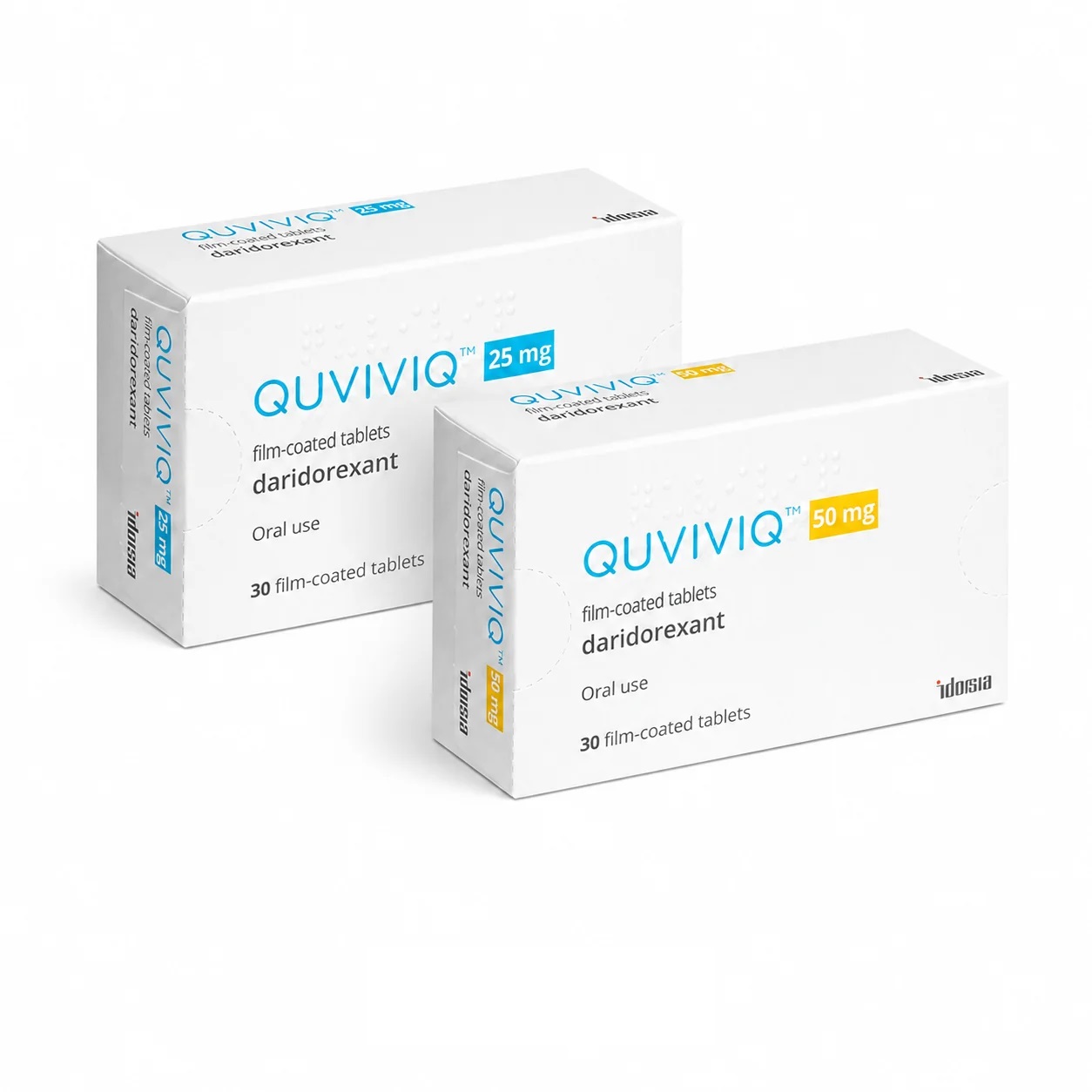
Quviviq contains daridorexant, a prescription-only medicine licensed in the UK for the treatment of long-term insomnia in adults. It works by reducing the activity of the brain’s wake-promoting signals, helping to improve both the ability to fall asleep and stay asleep. Unlike traditional sleeping tablets, Quviviq is not a benzodiazepine or Z-drug. It may be considered for adults with persistent insomnia where cognitive behavioural therapy for insomnia, known as CBT-I, has not been effective or is not available.
£62.99 – £64.99Price range: £62.99 through £64.99

Safe & compliant prescribing

UK-Registered Pharmacy

Quick, hassle-free online consultation

Your data is 100% protected

Next-day UK delivery available

NHS Providing Service since 2020
| Strength | 25MG, 50MG |
|---|
Quviviq Tablets for Long-Term Insomnia
Quviviq is a prescription medicine containing daridorexant, used to treat insomnia in adults when symptoms have been present for at least three months and have a significant effect on daytime functioning.
Daridorexant belongs to a group of medicines known as orexin receptor antagonists. Orexin is a naturally occurring substance in the brain that helps maintain wakefulness. By blocking the action of orexin, Quviviq reduces wake-promoting signals and can help adults fall asleep more easily, remain asleep for longer and improve daytime functioning.
Quviviq is different from benzodiazepines and Z-drugs and is specifically licensed for adults experiencing long-term insomnia.
NICE recommends daridorexant for adults whose insomnia occurs at least three nights per week, has lasted for three months or longer and considerably affects daytime functioning, where cognitive behavioural therapy for insomnia (CBT-I) has either been tried without sufficient benefit, is unavailable or is unsuitable.
Treatment with Quviviq should only be started following an appropriate clinical assessment to determine whether the medicine is suitable for you.
How Quviviq Works
Quviviq contains daridorexant, a dual orexin receptor antagonist.
Orexin plays an important role in helping the brain remain awake and alert. Daridorexant blocks the activity of orexin receptors, reducing wakefulness and helping the body’s normal sleep process take place.
Clinical studies have assessed the effects of daridorexant on both night-time insomnia symptoms and daytime functioning. Clinical data are available for up to 12 months of continuous treatment.
Who May Be Suitable for Quviviq?
Quviviq is licensed for adults with insomnia where symptoms:
Under NICE guidance, daridorexant is recommended when CBT-I has been tried but has not worked adequately, or when CBT-I is unavailable or unsuitable.
Quviviq will not be appropriate for everyone. Your medical history, current medicines and other health conditions should be reviewed before treatment is prescribed.
Quviviq Treatment Through Chesterfield Delivery Pharmacy
Requests for prescription treatment through Chesterfield Delivery Pharmacy should be subject to an appropriate clinical assessment before any medicine is supplied.
The assessment may include information about:
Where treatment is clinically appropriate and prescribed, the medicine can then be dispensed in accordance with the prescription.
Treatment should be reviewed within three months of starting and periodically afterwards to determine whether continued treatment remains appropriate.
How to Take Quviviq
Always take Quviviq exactly as instructed by your prescriber.
The recommended adult dose is usually 50 mg once each night. Some patients may be prescribed 25 mg once nightly, including people with moderate liver impairment or those taking certain medicines that interact with daridorexant.
The maximum recommended dose is 50 mg in a 24-hour period.
When to Take Quviviq
Take Quviviq:
Taking Quviviq with or shortly after a large meal may delay its effect on falling asleep.
Avoid grapefruit and grapefruit juice in the evening because they may increase the amount of daridorexant in your blood.
If You Forget a Dose
If you forget to take Quviviq at bedtime, do not take the missed tablet later during the night.
Take your next prescribed dose the following evening at the usual time.
Do not take a double dose to compensate for a forgotten tablet.
If You Take More Than Prescribed
Taking more Quviviq than prescribed may cause excessive sleepiness or muscle weakness.
If you accidentally take too much, contact your doctor, pharmacist, NHS 111 or another appropriate healthcare service for advice.
Stopping Quviviq
Quviviq can be stopped without gradually reducing the dose. Clinical studies did not identify withdrawal symptoms indicative of physical dependence following treatment discontinuation.
However, you should discuss stopping treatment with your prescriber so that your insomnia and ongoing treatment requirements can be reviewed.
Treatment Reviews
Treatment should be kept as short as appropriate for the individual patient.
Your response to Quviviq should normally be assessed within three months of starting treatment and reviewed periodically if treatment continues.
Maintaining healthy sleep habits and following any behavioural or CBT-I advice recommended by your healthcare professional may also form an important part of managing long-term insomnia.
What Does Quviviq Contain?
The active ingredient in Quviviq is daridorexant.
Quviviq 25 mg
Each tablet contains daridorexant hydrochloride equivalent to 25 mg of daridorexant.
Quviviq 50 mg
Each tablet contains daridorexant hydrochloride equivalent to 50 mg of daridorexant.
Tablet Core Ingredients
The tablet core contains:
Film Coating Ingredients
The coating contains:
Sodium Content
Each Quviviq tablet contains less than 1 mmol of sodium, equivalent to less than 23 mg, and is therefore considered essentially sodium-free.
What Do Quviviq Tablets Look Like?
25 mg tablets: Light purple, triangular film-coated tablets marked with “25” on one side and the Idorsia logo on the other.
50 mg tablets: Light orange, triangular film-coated tablets marked with “50” on one side and the Idorsia logo on the other.
Pack Size and Storage
Quviviq is available in blister packs containing 10 or 30 film-coated tablets, although not every pack size may be marketed.
The medicine does not require any special storage conditions. Keep it out of the sight and reach of children and do not use it after the expiry date printed on the packaging.
Unused or unwanted medicines should be returned to a pharmacy for appropriate disposal rather than placed in household waste or wastewater.
What Are the Possible Side Effects of Quviviq?
Like all medicines, Quviviq can cause side effects, although not everyone who takes it will experience them.
The most frequently reported side effects in clinical studies were headache and sleepiness.
Common Side Effects
These may affect up to 1 in 10 people:
Uncommon Side Effects
These may affect up to 1 in 100 people:
Sleep paralysis involves temporarily being unable to move or speak when falling asleep or waking. Hallucinations around the transition between sleeping and waking may also occur, particularly during the first weeks of treatment.
Symptoms resembling mild cataplexy, involving temporary muscle weakness, have also been reported with medicines in this class. Speak to your doctor if you experience these symptoms.
If you experience any persistent, severe or worrying side effects, contact your doctor or pharmacist.
Who Should Not Take Quviviq?
Do not take Quviviq if you:
Quviviq is not recommended for people with severe liver impairment.
The safety and effectiveness of Quviviq have not been established for people under 18 years of age.
Speak to Your Prescriber Before Taking Quviviq
Tell your prescriber if you:
Your prescriber should consider these factors when deciding whether Quviviq is appropriate for you.
Quviviq and Other Medicines
Tell your prescriber or pharmacist about all medicines you take, including prescription medicines, pharmacy medicines, over-the-counter products and herbal remedies.
Some medicines can increase or decrease the amount of daridorexant in your body.
Strong CYP3A4 inhibitors must not be taken with Quviviq. Certain moderate CYP3A4 inhibitors may require the lower 25 mg dose, while moderate or strong CYP3A4 inducers may reduce the effectiveness of Quviviq.
Other medicines that cause drowsiness or depress the central nervous system may increase sedative effects when taken with Quviviq.
Alcohol
Alcohol can increase impairment of coordination, balance and psychomotor performance when taken with Quviviq.
Avoid drinking alcohol while using Quviviq and follow the advice provided by your prescriber.
Driving and Using Machinery
Quviviq may affect your ability to drive or operate machinery, particularly when you first start treatment.
A period of approximately nine hours is recommended between taking Quviviq and driving or operating machinery.
Do not drive, cycle, operate machinery or undertake hazardous activities unless you are fully alert. Particular caution is recommended during the first few days of treatment.
Pregnancy and Breastfeeding
If you are pregnant, think you may be pregnant, are planning a pregnancy or are breastfeeding, speak to your doctor before taking Quviviq.
There are limited data regarding daridorexant during pregnancy. A small amount of daridorexant has been found to pass into breast milk, so the benefits and potential risks should be discussed with your healthcare professional.
Important Information
Quviviq is a prescription-only medicine and should only be used by the person for whom it has been prescribed.
Always follow your prescriber’s instructions and read the patient information leaflet supplied with the medicine before starting treatment.
If your symptoms change, your treatment does not appear to be working or you experience side effects that concern you, speak to a doctor, pharmacist or another appropriate healthcare professional.
For this particular product, I recommend not using “Buy Quviviq Online” as the main SEO heading. A safer H1 would be “Quviviq (Daridorexant) for Long-Term Insomnia”, because MHRA rules specifically prohibit advertising prescription-only medicines to the public, including promotional content on websites.




This website sells age-restricted products. Please confirm you are 18 years of age or older to continue.
Sorry, you must be 18 years or older to access this website.
Leave Site
Reviews
There are no reviews yet.