Description
What Is Levonorgestrel Emergency Contraception?
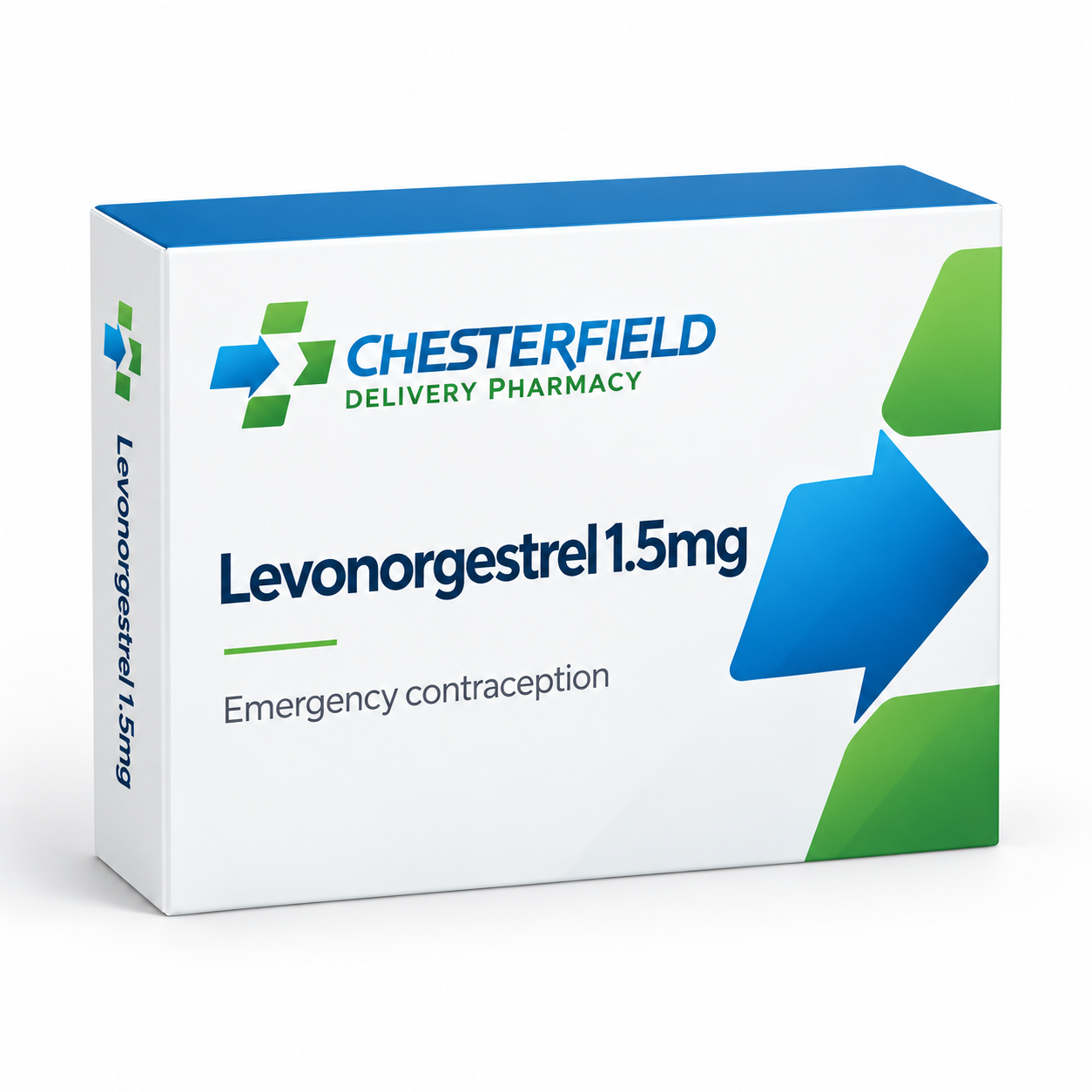
Levonorgestrel is an emergency contraceptive medicine used to help prevent pregnancy following unprotected sex or when a regular contraceptive method has failed.
It contains levonorgestrel, a synthetic progestogen that acts in a similar way to the naturally occurring hormone progesterone.
Levonorgestrel emergency contraception should be taken as soon as possible after unprotected intercourse, preferably within 12 hours and no later than 72 hours (3 days) afterwards. The sooner it is taken, the more effective it is likely to be.
When Might Levonorgestrel Be Needed?
Emergency contraception may be considered following situations such as:
- Sex without contraception
- A condom splitting, leaking or coming off
- Missed or incorrectly taken contraceptive pills
- Failure of another contraceptive method
- Concern that your usual contraception may not have provided adequate protection
A healthcare professional can advise whether levonorgestrel is the most appropriate emergency contraception based on when unprotected sex occurred and your individual circumstances.
How Does Levonorgestrel Work?
Levonorgestrel mainly works by delaying or preventing ovulation, reducing the likelihood that an egg will be available for fertilisation.
It may also help prevent sperm from fertilising an egg that has already been released.
Levonorgestrel does not terminate an existing pregnancy and is not an abortion medicine.
How Is Levonorgestrel Taken?
The standard emergency contraception dose is one 1.5mg (1500 microgram) tablet taken as a single dose.
It should be taken:
- As soon as possible after unprotected sex
- Preferably within 12 hours
- No later than 72 hours after intercourse
If you vomit within 3 hours of taking the tablet, another tablet should normally be taken as soon as possible.
Is Levonorgestrel a Regular Contraceptive?
No. Levonorgestrel emergency contraception is intended for occasional emergency use and should not replace a regular method of contraception.
If you have further unprotected sex after taking levonorgestrel, the tablet will not provide ongoing protection against pregnancy from that later intercourse.
Speak to a healthcare professional if you need advice about choosing or restarting regular contraception.
Does Levonorgestrel Protect Against STIs?
No. Levonorgestrel does not protect against sexually transmitted infections (STIs), including HIV.
Condoms can help reduce the risk of STI transmission. If you believe you may have been exposed to an STI, seek appropriate testing and professional advice.
Who Should Seek Advice Before Taking Levonorgestrel?
Speak to a pharmacist or other healthcare professional if:
- You think you may already be pregnant
- Your period is significantly late
- You had unprotected sex more than 72 hours ago
- You have severe liver problems
- You have a condition that may affect absorption from the digestive system
- You have previously had an ectopic pregnancy
- You take medicines that may reduce the effectiveness of levonorgestrel
Certain medicines, including some treatments for epilepsy, tuberculosis, HIV and herbal remedies containing St John’s wort, can reduce levonorgestrel levels and may mean a different emergency contraception option is more appropriate.
Possible Side Effects
Levonorgestrel is generally well tolerated, but possible side effects can include:
- Feeling sick
- Headache
- Lower abdominal discomfort
- Tiredness
- Dizziness
- Changes to the timing or pattern of your next period
Speak to a healthcare professional if you experience severe or persistent symptoms.
Important Information
Emergency contraception is more effective when taken promptly, so do not delay seeking treatment unnecessarily.
Levonorgestrel will not prevent every pregnancy and should not be relied upon as ongoing contraception.
For confidential advice about Levonorgestrel emergency contraception, the morning-after pill or ongoing contraceptive options, speak to a qualified healthcare professional at Chesterfield Delivery Pharmacy.
Directions
How Should I Take Levonorgestrel?
Always take Levonorgestrel exactly as directed by your pharmacist, doctor or other healthcare professional.
For emergency contraception, the usual dose is one 1.5mg tablet taken as a single dose.
When Should I Take Levonorgestrel?
Take Levonorgestrel:
- As soon as possible after unprotected sex or contraceptive failure
- Preferably within 12 hours
- No later than 72 hours (3 days) after unprotected intercourse
Emergency contraception is generally more effective the sooner it is taken, so treatment should not be unnecessarily delayed.
How to Take the Tablet
- Swallow the tablet whole with water
- Take the full dose at one time
- Do not delay taking the tablet while waiting for your next period
- Levonorgestrel can be taken at any point during your menstrual cycle, provided your period is not already overdue and pregnancy is not suspected
Always follow the instructions provided with your particular medicine.
What If I Vomit After Taking Levonorgestrel?
If you vomit within 3 hours of taking Levonorgestrel, another tablet should be taken as soon as possible.
Contact your pharmacist, doctor or sexual health service promptly so that another dose can be supplied if required.
What Happens If I Have Unprotected Sex Again?
Levonorgestrel only provides emergency contraception for the episode of unprotected sex that occurred before taking the tablet.
If you have unprotected sex again afterwards, you may still become pregnant.
If you are not using regular hormonal contraception, use a barrier method such as condoms until your next menstrual period.
Can I Continue My Regular Contraception?
If you already use a regular hormonal contraceptive, such as the contraceptive pill, you can generally continue taking it at the usual times after using Levonorgestrel.
Speak to a healthcare professional if you are unsure how to restart or continue your usual contraception.
Medicines That May Affect Levonorgestrel
Certain medicines can make Levonorgestrel less effective, particularly enzyme-inducing medicines used for conditions such as epilepsy, tuberculosis or HIV, as well as herbal remedies containing St John’s wort.
If you have taken an enzyme-inducing medicine during the previous 4 weeks, speak to a healthcare professional. A copper intrauterine device (Cu-IUD) may be recommended, or a different Levonorgestrel dose may be required if a Cu-IUD is not suitable.
When Should I Take a Pregnancy Test or Seek Advice?
Speak to a healthcare professional if:
- Your next period is more than 5 days late
- Your next period is unusually light or unusually heavy
- You develop symptoms suggesting pregnancy
- You remain concerned that emergency contraception may not have worked
A pregnancy test or further assessment may be recommended.
Important Information
Levonorgestrel is intended for emergency contraception, not as a replacement for regular birth control.
It does not protect against sexually transmitted infections.
For confidential advice about Levonorgestrel, the morning-after pill or ongoing contraception, speak to a qualified healthcare professional at Chesterfield Delivery Pharmacy.
Ingredients
What Ingredients Are in Levonorgestrel Emergency Contraception?
Levonorgestrel emergency contraception contains levonorgestrel as its active ingredient. Levonorgestrel is a synthetic progestogen used to help reduce the chance of pregnancy after unprotected sex or contraceptive failure.
Active Ingredient
Each standard emergency contraceptive tablet contains:
- Levonorgestrel 1.5mg (1500 micrograms)
This is normally supplied as a single tablet for one complete emergency contraception dose.
Other Ingredients
The inactive ingredients, also known as excipients, can vary depending on the manufacturer of the Levonorgestrel tablet supplied.
Depending on the product, these may include:
- Lactose monohydrate
- Maize starch
- Potato starch
- Povidone
- Colloidal anhydrous silica
- Magnesium stearate
- Talc
These ingredients help form and stabilise the tablet but do not provide the contraceptive effect of levonorgestrel.
Does Levonorgestrel Contain Lactose?
Many UK Levonorgestrel 1.5mg emergency contraceptive tablets contain lactose monohydrate.
If you have been told by your doctor that you have an intolerance to certain sugars, speak to your pharmacist or healthcare professional before taking the tablet.
Important Allergy Information
Do not take Levonorgestrel if you are allergic to levonorgestrel or any of the other ingredients in the particular product supplied to you.
If you have known medicine allergies, food intolerances or sensitivities to tablet ingredients, check the patient information leaflet before use.
Check Your Specific Product
Several manufacturers supply Levonorgestrel 1.5mg emergency contraception in the UK, so the inactive ingredients may differ between brands even though the active ingredient and dose are the same.
Always read the patient information leaflet supplied with your medicine for the complete and most up-to-date ingredients list.
If you have any concerns about the ingredients in Levonorgestrel emergency contraception, speak to a qualified healthcare professional at Chesterfield Delivery Pharmacy before taking it.
Warnings
Levonorgestrel is intended for emergency contraception following unprotected sex or contraceptive failure. It should be taken as soon as possible, preferably within 12 hours and no later than 72 hours (3 days) after unprotected intercourse.
It is designed for occasional emergency use and should not replace a regular method of contraception.
Who Should Speak to a Healthcare Professional Before Taking Levonorgestrel?
Tell your pharmacist, doctor or other healthcare professional before taking Levonorgestrel if:
- You think you may already be pregnant
- Your period is overdue or unusually different from normal
- You have severe liver problems
- You have a condition that affects absorption from your digestive system, such as Crohn’s disease
- You have previously had an ectopic pregnancy
- You have previously had inflammation or infection of the fallopian tubes
- You are taking medicines or herbal remedies that may reduce the effectiveness of Levonorgestrel
A healthcare professional can assess whether Levonorgestrel or another form of emergency contraception is more suitable for you.
Medicines That Can Reduce the Effectiveness of Levonorgestrel
Certain medicines can speed up the breakdown of Levonorgestrel in the body and may make emergency contraception less effective.
Tell your healthcare professional if, during the previous 4 weeks, you have used medicines such as:
- Certain epilepsy medicines, including carbamazepine, phenytoin, phenobarbital or primidone
- Rifampicin or rifabutin for tuberculosis
- Certain medicines used to treat HIV
- Griseofulvin for fungal infections
- Herbal remedies containing St John’s wort
If you have recently used an enzyme-inducing medicine, a copper intrauterine device (Cu-IUD) may be recommended as emergency contraception.
If a Cu-IUD is not suitable or acceptable, a healthcare professional may advise a different Levonorgestrel dose. Do not take an additional dose unless specifically advised.
Pregnancy
Levonorgestrel will not terminate an existing pregnancy and is not an abortion medicine.
If you are already pregnant, Levonorgestrel will not work as emergency contraception.
Speak to a healthcare professional if your period is already overdue or you have symptoms that may suggest pregnancy before taking the tablet.
Risk of Ectopic Pregnancy
If pregnancy occurs despite taking Levonorgestrel, there is a possibility that it could be an ectopic pregnancy, where the pregnancy develops outside the womb.
Seek medical advice promptly if you experience:
- Severe or persistent lower abdominal pain
- Pain mainly affecting one side of the abdomen
- Unusual vaginal bleeding
- Shoulder-tip pain
- Severe dizziness or fainting
This is particularly important if you have previously experienced an ectopic pregnancy or problems affecting the fallopian tubes.
What If I Vomit After Taking Levonorgestrel?
If you vomit within 3 hours of taking Levonorgestrel, another tablet should be taken as soon as possible.
Contact your pharmacist or healthcare professional promptly so that another dose can be supplied if required.
Further Unprotected Sex
Levonorgestrel does not provide ongoing contraceptive protection.
If you have unprotected sex again after taking the tablet, you may still become pregnant. Use appropriate contraception and speak to a healthcare professional if you need advice about continuing or restarting your regular contraceptive method.
Repeated Use
Levonorgestrel is intended for emergency situations and is not as effective as regular contraception.
Repeated use within the same menstrual cycle is generally not recommended because it can cause disruption to your menstrual cycle.
If you frequently require emergency contraception, speak to a healthcare professional about longer-term contraceptive options.
Does Levonorgestrel Protect Against STIs?
No. Levonorgestrel does not protect against sexually transmitted infections (STIs).
Condoms can help reduce the risk of STI transmission. If you think you may have been exposed to an STI, seek appropriate testing and professional advice.
When Should I Take a Pregnancy Test or Seek Advice?
Speak to a healthcare professional and consider a pregnancy test if:
- Your next period is more than 5 days late
- Your period is unusually light or unusually heavy
- You develop symptoms of pregnancy
- You experience significant abdominal pain
- You remain concerned that the emergency contraception may not have worked
Important Information
Always take Levonorgestrel exactly as directed and read the patient information leaflet supplied with your medicine.
Emergency contraception is generally more effective the sooner it is used, so do not unnecessarily delay seeking treatment.
For confidential advice about Levonorgestrel emergency contraception, the morning-after pill or ongoing contraceptive options, speak to a qualified healthcare professional at Chesterfield Delivery Pharmacy.







Reviews
There are no reviews yet.