
Additional information
| Strength | 408MG |
|---|---|
| Pack Size | 28 CAPS |
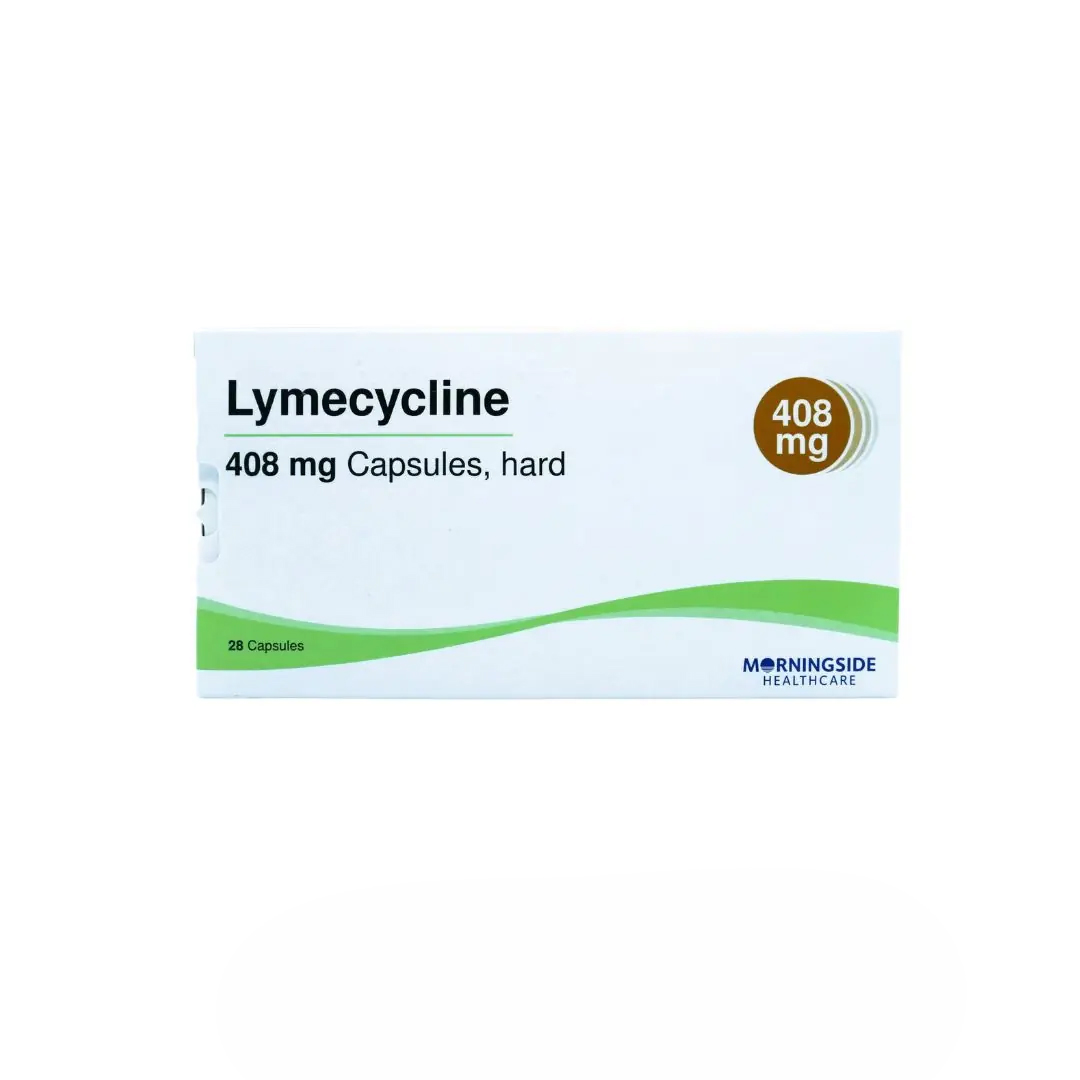
Lymecycline is a prescription tetracycline antibiotic commonly used as part of the treatment of moderate to severe acne. It may also be prescribed for certain other bacterial infections when clinically appropriate.
For acne, Lymecycline helps reduce bacteria involved in breakouts and decreases the inflammation that contributes to red, swollen and painful spots.
£20.00

Safe & compliant prescribing

UK-Registered Pharmacy

Quick, hassle-free online consultation

Your data is 100% protected

Next-day UK delivery available
NHS Providing Service since 2020
| Strength | 408MG |
|---|---|
| Pack Size | 28 CAPS |
What Is Lymecycline?
Lymecycline is a prescription-only tetracycline antibiotic commonly used as part of the treatment of moderate to severe acne. It may also be prescribed for certain other bacterial infections when considered appropriate by a healthcare professional.
For acne, Lymecycline helps reduce the bacteria associated with inflamed spots while also helping to control inflammation in the skin.
How Does Lymecycline Work?
Lymecycline belongs to a group of antibiotics known as tetracyclines.
It works by preventing susceptible bacteria from producing the proteins they need to grow and multiply. In acne treatment, this can help reduce:
Improvement usually develops gradually rather than immediately, so regular use as prescribed is important.
Important Information
Always take Lymecycline exactly as prescribed and read the patient information leaflet supplied with your medicine.
Regular treatment reviews are important to assess whether your acne is improving and whether the antibiotic remains necessary.
For professional advice about Lymecycline, moderate to severe acne, prescription acne treatment or oral antibiotics for acne, speak to a qualified healthcare professional at Chesterfield Delivery Pharmacy.
How Should I Take Lymecycline?
Always take Lymecycline exactly as prescribed by your doctor, pharmacist or other healthcare professional. The dose and length of treatment will depend on whether it is being used for acne or another bacterial infection.
Recommended Dose for Acne
For acne, the usual dose is:
For other bacterial infections, a different dose or dosing schedule may be prescribed. Always follow the directions on your prescription label.
How to Take Lymecycline Capsules
Tetracycline antibiotics can occasionally irritate the oesophagus, so taking the capsule with plenty of water is important.
Can I Take Lymecycline With Food?
Yes. Lymecycline can be taken with or without food.
If you experience nausea or stomach discomfort, taking the capsule with or shortly after food may help. Moderate amounts of milk do not significantly affect the absorption of Lymecycline.
Important Information
Always:
For professional advice about Lymecycline, acne treatment or oral antibiotics for acne, speak to a qualified healthcare professional at Chesterfield Delivery Pharmacy.
What Ingredients Are in Lymecycline?
Lymecycline capsules contain lymecycline as the active ingredient. Lymecycline belongs to the tetracycline group of antibiotics and is commonly prescribed as part of the treatment of moderate to severe acne.
Active Ingredient
A standard Lymecycline capsule commonly contains:
The medicine works by preventing susceptible bacteria from producing proteins they need to grow and multiply.
Other Ingredients
The inactive ingredients, also known as excipients, can vary depending on the manufacturer supplied.
Some UK Lymecycline capsules may contain ingredients such as:
These ingredients help form and stabilise the capsule but do not provide the antibacterial action of Lymecycline.
Do All Lymecycline Capsules Have the Same Ingredients?
No. Different brands and manufacturers may use different capsule-shell ingredients and colouring agents.
For example, one current UK generic Lymecycline formulation contains:
Another UK product, Tetralysal, uses magnesium stearate and colloidal hydrated silica in the capsule contents, with different colourings in the capsule shell.
Check Your Specific Lymecycline Product
Because inactive ingredients vary between manufacturers, always refer to the packaging and patient information leaflet supplied with your medicine for the complete ingredient list.
Your pharmacist can also confirm the ingredients in the specific Lymecycline brand or generic product you have received.
For professional advice about Lymecycline ingredients, tetracycline antibiotics or acne treatment, speak to a qualified healthcare professional at Chesterfield Delivery Pharmacy.
What Are the Side Effects of Lymecycline?
Like all medicines, Lymecycline can cause side effects, although not everyone who takes it will experience them. Many side effects are mild, but some reactions require prompt medical attention.
Common Side Effects
Common side effects may affect up to 1 in 10 people and include:
These are among the most frequently reported side effects of Lymecycline.
Other Possible Side Effects
Other reported effects have an unknown frequency, meaning it is not currently possible to estimate how often they occur.
These may include:
Lymecycline can make the skin more sensitive to sunlight, so avoid excessive exposure to direct sunlight and sunbeds during treatment.
Important Information
Always take Lymecycline exactly as prescribed and read the patient information leaflet supplied with your medicine.
For professional advice about Lymecycline side effects, acne treatment or tetracycline antibiotics, speak to a qualified healthcare professional at Chesterfield Delivery Pharmacy.
Lymecycline is a tetracycline antibiotic commonly prescribed as part of the treatment of moderate to severe acne. It may not be suitable for everyone, so tell your doctor, pharmacist or other healthcare professional about your medical history and any medicines or supplements you take before starting treatment.
Do Not Take Lymecycline If You:
Lymecycline should only be used following an appropriate clinical assessment.
Kidney and Liver Problems
Tell your prescriber if you have:
Additional caution may be required, and Lymecycline is contraindicated in patients with overt renal insufficiency.
Lupus and Myasthenia Gravis
Speak to your healthcare professional before taking Lymecycline if you have:
These conditions are specifically highlighted in current UK patient information as requiring additional medical consideration.
Lymecycline and Retinoid Acne Treatments
Do not take Lymecycline at the same time as oral retinoids, such as isotretinoin.
Combining tetracycline antibiotics with oral retinoids can increase the risk of intracranial hypertension, where pressure builds up around the brain.
High-dose vitamin A supplements, particularly doses above 10,000 IU per day, should also be avoided unless specifically advised by a healthcare professional.
Severe Headaches or Changes in Vision
Stop taking Lymecycline and seek medical advice promptly if you develop:
These symptoms can rarely indicate increased pressure inside the skull and require medical assessment.
Sunlight and Photosensitivity
Lymecycline can make your skin more sensitive to sunlight and ultraviolet light.
During treatment:
Medicines and Supplements That Can Interact With Lymecycline
Tell your healthcare professional if you take:
Mineral-containing medicines and supplements may reduce Lymecycline absorption and should generally be taken at least 2 hours before or after Lymecycline.
Can I Have Milk or Dairy Products With Lymecycline?
Unlike some older tetracycline antibiotics, moderate amounts of milk do not significantly reduce the absorption of Lymecycline.
You therefore do not normally need to avoid ordinary amounts of milk or dairy products simply because you are taking Lymecycline.
Pregnancy
Lymecycline is not recommended during pregnancy because tetracycline antibiotics can affect the development of a baby’s bones and teeth.
Tell your doctor if you:
A different treatment will usually be considered.
Breastfeeding
Speak to your doctor or pharmacist before taking Lymecycline while breastfeeding.
The product prescribing information advises against its use during breastfeeding, although current NHS guidance states that short-term treatment may sometimes be considered when the baby is healthy. Your healthcare professional should assess the individual benefits and risks before treatment.
Children and Adolescents
Lymecycline is commonly prescribed for acne in adults and young people aged 12 years and over.
It is generally not used for acne treatment in younger children without specialist medical assessment. Tetracycline antibiotics can affect developing teeth and should not be used in young children where contraindicated by the specific product information.
Take Lymecycline With Plenty of Water
Swallow the capsule with a full glass of water.
Tetracycline capsules can occasionally irritate or ulcerate the oesophagus, so taking them with sufficient fluid is important.
Serious Allergic or Skin Reactions
Stop taking Lymecycline and seek urgent medical attention if you develop:
Rare serious reactions, including anaphylaxis and Stevens-Johnson syndrome, have been reported.
Important Information
Always take Lymecycline exactly as prescribed and attend any recommended acne treatment reviews.
Do not use leftover antibiotics, share your medicine with another person or continue antibiotic treatment longer than advised.
For professional advice about Lymecycline, acne treatment, tetracycline antibiotics or medicine interactions, speak to a qualified healthcare professional at Chesterfield Delivery Pharmacy.
How Should I Store Lymecycline?
Lymecycline capsules should be stored correctly to help protect the medicine and maintain its quality throughout the treatment period.
Lymecycline Storage Instructions
The expiry date refers to the last day of the month shown on the pack.
Keep Lymecycline in Its Original Packaging
Do not transfer the capsules into another unlabelled container unless specifically advised by a pharmacist.
Keeping Lymecycline in its original packaging helps protect the medicine and ensures that important information, including the strength, expiry date and dosing instructions, remains available.
What If the Capsules Have Been Stored Incorrectly?
Speak to a pharmacist before taking Lymecycline if:
Do not take capsules that appear damaged or have passed their expiry date.
How Should I Dispose of Unused Lymecycline?
Do not dispose of unwanted or expired Lymecycline through household wastewater or general household waste.
Take any unused antibiotics to a pharmacy and ask how they should be disposed of safely.
Unused antibiotics should not be kept for treating a future infection or given to another person.
Important Information
Always follow the storage instructions provided with the exact Lymecycline product you receive and read the patient information leaflet supplied with your medicine.
For professional advice about Lymecycline storage, acne treatment or prescription antibiotics, speak to a qualified healthcare professional at Chesterfield Delivery Pharmacy.



This website sells age-restricted products. Please confirm you are 18 years of age or older to continue.
Sorry, you must be 18 years or older to access this website.
Leave Site
Reviews
There are no reviews yet.