
Additional information
| Strength | 408MG |
|---|---|
| Pack Size | 28 TABS |
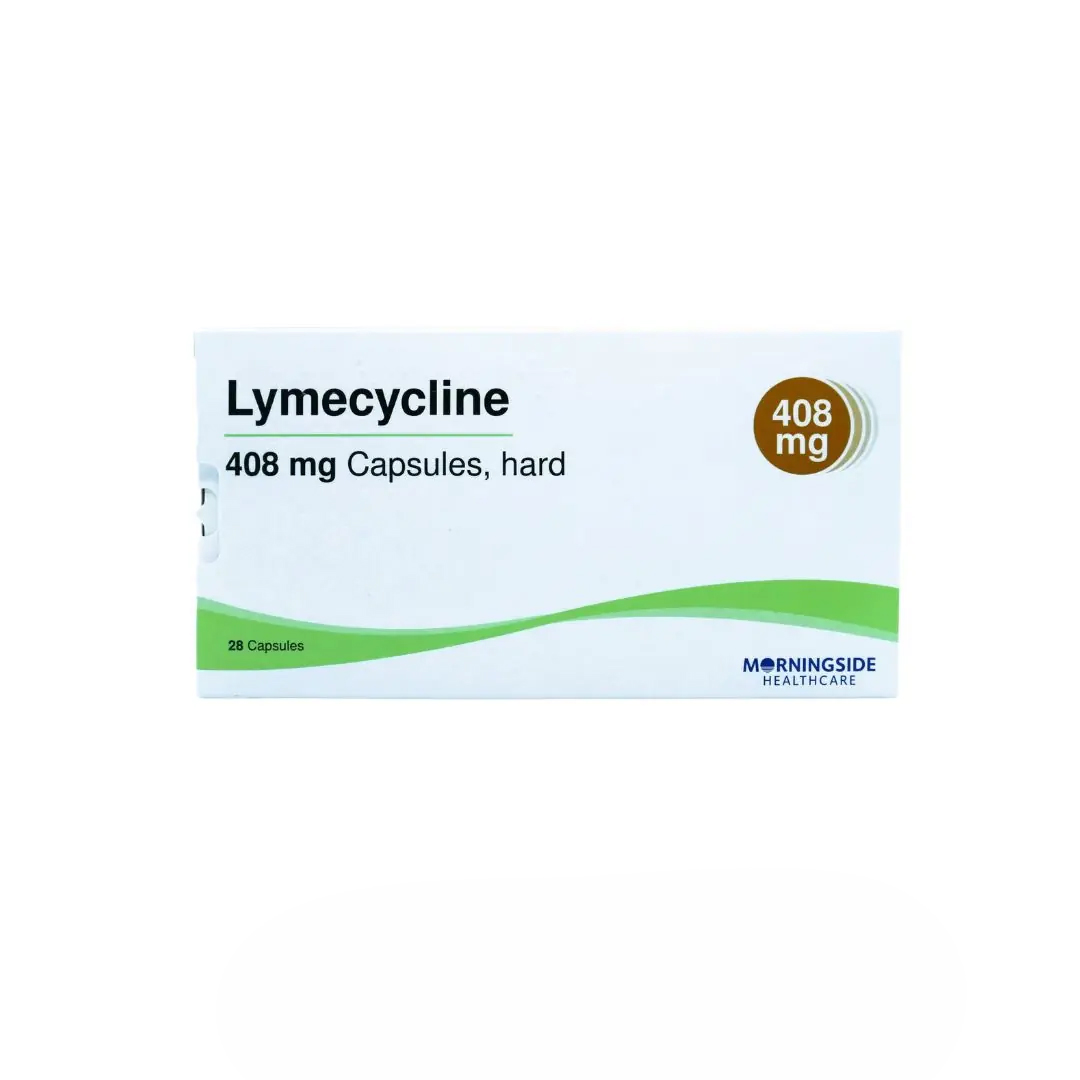
Lymecycline is a prescription oral antibiotic commonly used to treat moderate to severe acne, particularly where inflamed spots and persistent breakouts are present. It belongs to the tetracycline group of antibiotics and works by reducing the bacteria linked with acne while also helping to calm inflammation in the skin. With regular use as prescribed, Lymecycline can support clearer skin and reduce the frequency and severity of acne flare-ups over time.
£20.00

Safe & compliant prescribing

UK-Registered Pharmacy

Quick, hassle-free online consultation
Your data is 100% protected

Next-day UK delivery available
NHS Providing Service since 2020
| Strength | 408MG |
|---|---|
| Pack Size | 28 TABS |
Lymecycline is a prescription oral antibiotic commonly used to treat moderate to severe acne, particularly when inflamed spots are widespread or when topical acne treatments alone have not provided sufficient improvement.
It belongs to a group of antibiotics called tetracyclines. Lymecycline works by reducing the growth of bacteria associated with acne and helping to control inflammation within the skin.
For acne treatment, Lymecycline is usually prescribed as part of a wider treatment plan that may also include an appropriate topical acne medicine.
With consistent use as directed, treatment can help reduce:
Acne generally improves gradually, so it is important to continue treatment according to your prescriber’s instructions rather than expecting immediate results.
How does Lymecycline work for acne?
Acne develops through several processes, including blocked pores, increased oil production, inflammation and the activity of bacteria within the skin.
Lymecycline works by interfering with the ability of susceptible bacteria to produce proteins needed for growth and reproduction.
Its antibacterial and anti-inflammatory effects can help reduce the number and severity of inflammatory acne lesions.
Because Lymecycline is an antibiotic, it should be used responsibly to reduce the risk of antibiotic resistance.
Who may be prescribed Lymecycline?
Lymecycline may be considered for adults and adolescents aged 12 years and over who require oral antibiotic treatment for acne.
A prescriber will consider factors such as:
Treatment through Chesterfield Delivery Pharmacy is subject to an appropriate clinical assessment and prescription.
How should I take Lymecycline for acne?
For acne, the usual dose is one Lymecycline capsule once daily, unless your healthcare professional gives you different instructions.
A commonly supplied Lymecycline capsule contains 408 mg of lymecycline, equivalent to 300 mg of tetracycline base.
To take Lymecycline safely:
Taking the capsule with plenty of water helps reduce the risk of irritation or ulceration of the oesophagus.
How long does Lymecycline take to work?
Acne responds gradually to antibiotic treatment.
The UK product information states that treatment for acne is normally continued for at least 8 weeks, although your prescriber will determine how long your course should continue.
Current NICE acne guidance recommends reviewing treatments that include an oral antibiotic at around 12 weeks. If acne has completely cleared, the antibiotic may be stopped while appropriate topical treatment continues. Antibiotic-containing acne treatment should only continue beyond six months in exceptional circumstances.
Do not continue taking Lymecycline indefinitely without appropriate clinical review.
What should I do if I forget a dose?
If you forget to take your Lymecycline capsule, take it when you remember unless it is nearly time for your next scheduled dose.
If your next dose is due soon, skip the forgotten capsule and continue as normal.
Do not take two doses together to make up for a missed dose.
Can Lymecycline be taken with food or milk?
Lymecycline does not normally need to be taken on an empty stomach.
Unlike some older tetracycline antibiotics, the absorption of Lymecycline is not significantly affected by moderate amounts of milk.
However, certain medicines and mineral supplements can reduce the absorption of Lymecycline.
Do not take Lymecycline at the same time as products containing:
These products should generally be separated from Lymecycline by at least 2 hours. Follow the advice provided by your pharmacist or prescriber.
What ingredients are in Lymecycline capsules?
The active ingredient is lymecycline.
Many UK formulations contain 408 mg of lymecycline per capsule, equivalent to 300 mg of tetracycline base.
The inactive ingredients can vary according to the manufacturer supplied.
For example, some Lymecycline capsules may contain ingredients such as:
Because formulations can differ, always check the Patient Information Leaflet supplied with your specific medicine for the complete ingredient list.
If you have an allergy or sensitivity to any medicine or capsule ingredient, tell your pharmacist or prescriber before starting treatment.
What should I know before taking Lymecycline?
Lymecycline is not suitable for everyone.
Do not take Lymecycline if you are allergic to:
Tell your prescriber before treatment if you:
Lymecycline should also not be used at the same time as certain oral retinoid acne treatments because combining these medicines can increase the risk of raised pressure inside the skull.
Lymecycline and isotretinoin
Tell your prescriber if you are taking or have recently taken an oral retinoid such as isotretinoin.
Oral retinoids should not normally be used at the same time as Lymecycline.
High-dose vitamin A supplements should also be discussed with your healthcare professional before treatment.
Lymecycline and sunlight
Tetracycline antibiotics can sometimes make the skin more sensitive to sunlight and ultraviolet light.
While taking Lymecycline:
This precaution can help reduce the risk of photosensitivity reactions.
Pregnancy and breastfeeding
Lymecycline should not be taken during pregnancy.
Tetracycline antibiotics can affect the developing bones and teeth of an unborn baby.
Lymecycline should also not be taken while breastfeeding because tetracyclines can pass into breast milk.
If you are pregnant, planning to become pregnant or breastfeeding, tell your healthcare professional before starting treatment.
Children and adolescents
Lymecycline used for acne is generally prescribed to adolescents aged 12 years and over and adults.
The safety and effectiveness of Lymecycline in children under 12 have not been established for the usual acne indication.
Your prescriber will determine whether treatment is suitable based on age and individual circumstances.
Lymecycline and other medicines
Tell your prescriber about all medicines, vitamins and supplements you currently take.
Particular care may be needed with:
Your pharmacist or prescriber can advise whether doses need to be separated or whether another treatment is more appropriate.
What are the possible side effects of Lymecycline?
Like all medicines, Lymecycline can cause side effects, although not everyone will experience them.
Common side effects include:
These may affect up to 1 in 10 people.
Other reported side effects can include:
Serious side effects
Stop taking Lymecycline and seek medical attention if you experience symptoms such as:
Persistent headache combined with eyesight changes can be a sign of intracranial hypertension, a rare but important reaction associated with tetracycline medicines.
Antibiotic-associated diarrhoea
Speak to a healthcare professional if you develop significant or persistent diarrhoea while taking Lymecycline.
Like other antibiotics, treatment can sometimes disturb the normal bacteria in the digestive system and lead to more serious bowel inflammation.
Do not simply continue treatment if diarrhoea becomes severe, persistent or is associated with abdominal pain or other concerning symptoms.
How should I store Lymecycline?
Lymecycline should be stored according to the instructions on the particular pack supplied.
For commonly supplied UK Lymecycline capsules:
Do not use expired tetracycline antibiotics.
Return unused or expired capsules to Chesterfield Delivery Pharmacy or another pharmacy for safe disposal. Do not dispose of medicines through household wastewater.
Important Information
Lymecycline is a prescription-only tetracycline antibiotic commonly used as part of the treatment of moderate to severe inflammatory acne.
Because it is an antibiotic, treatment should only continue for as long as clinically necessary. Regular review helps assess whether your acne is improving and reduces unnecessary antibiotic exposure.
Treatment through Chesterfield Delivery Pharmacy is subject to an appropriate clinical consultation and prescription.
Always take Lymecycline exactly as directed by your healthcare professional and read the Patient Information Leaflet supplied with your medicine before starting treatment.



This website sells age-restricted products. Please confirm you are 18 years of age or older to continue.
Sorry, you must be 18 years or older to access this website.
Leave Site
Reviews
There are no reviews yet.