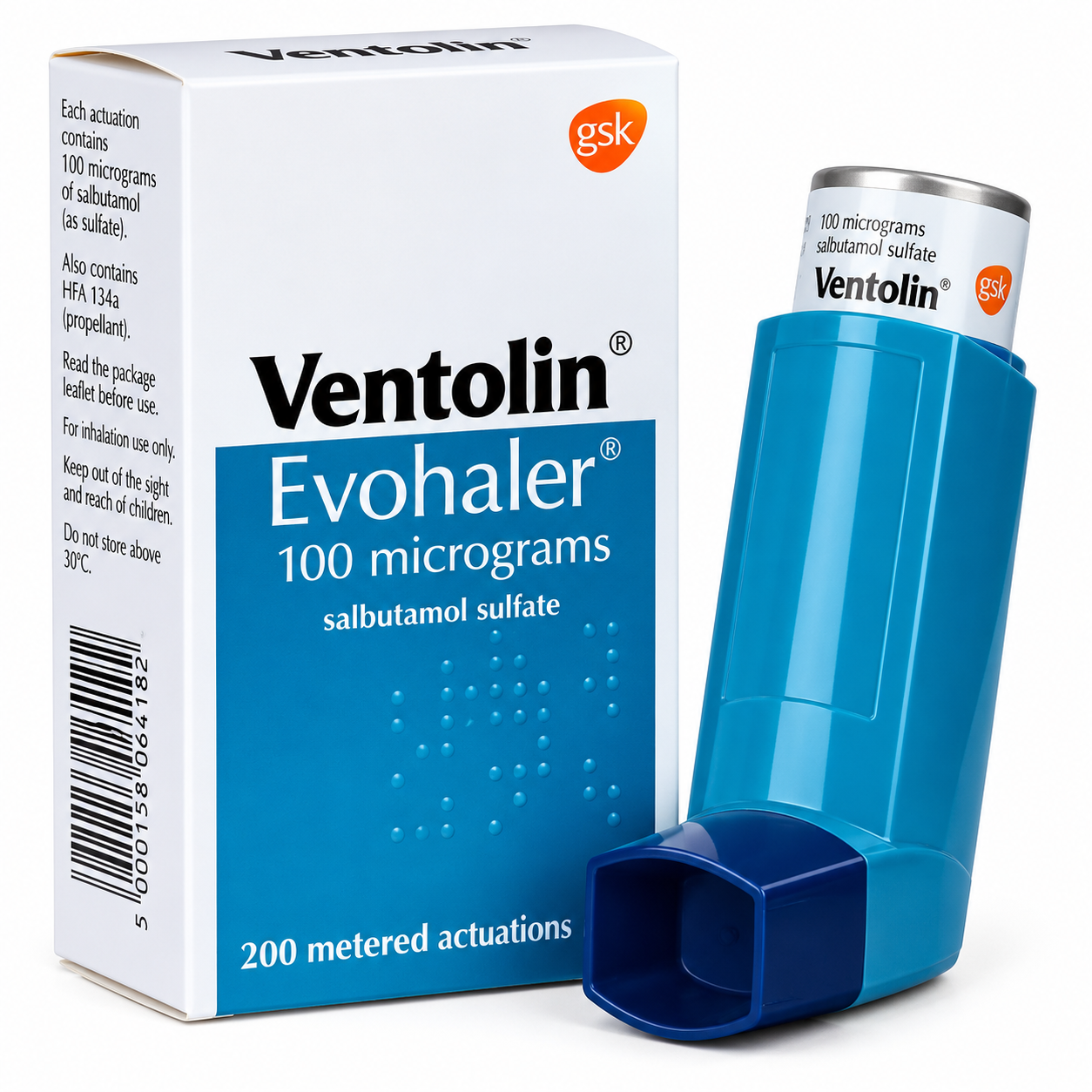
Salbutamol (Ventolin) 100 micrograms/dose Inhaler is a short-acting bronchodilator used to provide rapid relief from breathing symptoms associated with conditions such as asthma and chronic obstructive pulmonary disease (COPD).
It works by relaxing the muscles surrounding the airways, helping them to open and making it easier to breathe.
Salbutamol can help relieve symptoms such as:
Wheezing
Shortness of breath
Chest tightness
Coughing caused by narrowed airways
The inhaler usually starts working within a few minutes, making it suitable as a reliever inhaler when breathing symptoms occur.
£15.00
Your Health &Wellness Centre
Trusted pharmacy advice, tips and guides for all your healthcare needs
Salbutamol (Ventolin) 100 micrograms/dose Inhaler is a fast-acting bronchodilator used to relieve breathing symptoms caused by narrowing of the airways. It is commonly supplied as a blue reliever inhaler and may be prescribed for conditions such as asthma and chronic obstructive pulmonary disease (COPD).
It can help relieve symptoms including:
Wheezing
Shortness of breath
Chest tightness
Coughing associated with narrowed airways
Salbutamol works by relaxing the muscles surrounding the airways, helping them open so that air can move more freely into and out of the lungs.
How Does Salbutamol Work?
Salbutamol belongs to a group of medicines called short-acting beta-2 agonists (SABAs).
When the muscles surrounding the airways tighten, breathing can become more difficult. Salbutamol acts on these muscles, helping them relax and widening the airways.
The effects can begin within approximately 5 minutes and generally last for around 4 to 6 hours.
What Is Salbutamol Used For?
Salbutamol may be prescribed to:
Relieve sudden asthma symptoms
Ease wheezing and breathlessness
Treat reversible narrowing of the airways
Relieve symptoms associated with COPD
Help prevent exercise-related breathing symptoms
Help prevent symptoms triggered by known allergens when advised by a healthcare professional
It is normally used when required, according to your prescribed asthma or respiratory treatment plan.
Using Salbutamol Before Exercise
Some people may be advised to use salbutamol before exercise or exposure to a known trigger.
The appropriate dose and timing will depend on your individual treatment plan. Your healthcare professional will advise you on how and when to use your inhaler for prevention.
Salbutamol Is a Reliever Medicine
Salbutamol provides short-term relief from breathing symptoms but does not treat the underlying inflammation associated with asthma.
If you have asthma, salbutamol should not normally be your only treatment. An inhaled corticosteroid or another anti-inflammatory medicine may also be required as part of an appropriate asthma management plan.
Important Information
Different salbutamol inhalers can have different devices, dose instructions and techniques.
Always:
Follow the instructions for the exact inhaler supplied
Check your inhaler technique regularly
Do not exceed your prescribed dose
Keep your reliever inhaler accessible if advised to carry it
Tell your healthcare professional about other medicines and medical conditions
Seek urgent medical help if you develop severe breathing difficulty or if your reliever inhaler is not providing the expected relief.
For professional advice about Salbutamol (Ventolin) 100 micrograms/dose Inhaler, blue reliever inhalers, asthma or COPD treatment, speak to a qualified healthcare professional at Chesterfield Delivery Pharmacy.
Directions
How Should I Use Salbutamol?
Always use your Salbutamol inhaler exactly as prescribed by your doctor, asthma nurse, pharmacist or other healthcare professional.
Salbutamol is normally used as a reliever inhaler when symptoms such as wheezing, breathlessness, coughing or chest tightness occur. It may also be prescribed before exercise or exposure to a known trigger.
How to Use a Standard Salbutamol Metered-Dose Inhaler
If you have been supplied with a standard pressurised inhaler:
Remove the mouthpiece cover and check that the mouthpiece is clean and clear.
Shake the inhaler well.
Hold the inhaler upright.
Breathe out gently and comfortably, away from the inhaler.
Place the mouthpiece between your teeth and close your lips around it.
Begin to breathe in slowly and deeply through your mouth.
As you start breathing in, press down on the canister once to release one puff.
Continue breathing in steadily and deeply.
Remove the inhaler from your mouth and hold your breath for as long as is comfortable, ideally for several seconds.
Breathe out slowly.
If you have been prescribed a second puff, wait around 30 to 60 seconds, shake the inhaler again and repeat the steps above.
How Much Salbutamol Should I Use?
The exact dose depends on your age, condition and the inhaler prescribed.
For many people, the usual reliever dose is 1 or 2 puffs when needed.
Do not exceed the dose recommended in your prescription, asthma action plan or patient information leaflet.
Using Salbutamol Before Exercise
Salbutamol may sometimes be prescribed before exercise or exposure to a known trigger to help prevent breathing symptoms.
Follow the dose and timing recommended by your healthcare professional rather than taking additional puffs without advice.
Using a Spacer
If you use a pressurised metered-dose inhaler, your doctor, nurse or pharmacist may recommend a spacer device.
A spacer can make it easier to coordinate pressing the inhaler with breathing in and may help more medicine reach the lungs.
Ask a healthcare professional to check your inhaler and spacer technique regularly.
Different Salbutamol Inhalers Require Different Techniques
Not every Salbutamol inhaler is used in the same way.
For example, dry-powder inhalers such as Easyhaler require a strong, deep inhalation rather than the slow inhalation used with a standard pressurised inhaler.
Always read the instructions supplied with the exact inhaler you receive.
What If I Need Salbutamol More Often Than Usual?
Needing your reliever inhaler frequently may mean that your asthma or respiratory condition is not adequately controlled.
Speak to a doctor, pharmacist or asthma nurse if:
You need Salbutamol more frequently than usual
You are using it on 3 or more days each week
You regularly need it during the night
Your usual dose is providing less relief than before
Frequent reliever use should prompt a review of your asthma or COPD treatment.
What Should I Do During an Asthma Attack?
Follow your personal asthma action plan if you have one.
For a sudden asthma attack, NHS guidance advises taking one puff every 30 to 60 seconds, up to 10 puffs, preferably using a spacer where available.
Call 999 if you do not feel better after 10 puffs or if you become worse at any point.
Important Information
Correct inhaler technique is essential because poor technique can mean that too little medicine reaches your lungs.
Have your technique checked periodically by a doctor, pharmacist, asthma nurse or other trained healthcare professional.
For professional advice about Salbutamol inhalers, blue reliever inhalers, asthma, COPD or inhaler technique, speak to a qualified healthcare professional at Chesterfield Delivery Pharmacy.
Ingredients
What Ingredients Are in a Salbutamol Inhaler?
Salbutamol inhalers contain salbutamol sulfate as the active ingredient. Salbutamol is a short-acting bronchodilator that helps relax the muscles surrounding the airways, making it easier to breathe during episodes of wheezing, chest tightness or breathlessness.
Active Ingredient
The amount of salbutamol delivered with each puff depends on the inhaler supplied.
For example:
Ventolin Evohaler delivers 100 micrograms of salbutamol per actuation
Easyhaler Salbutamol is available in strengths delivering 100 micrograms or 200 micrograms per actuation
Salbutamol is supplied in these inhalers as salbutamol sulfate.
Other Ingredients in Pressurised Salbutamol Inhalers
Pressurised metered-dose inhalers use a propellant to deliver the medicine into the lungs.
For example, Ventolin Evohaler contains:
Salbutamol sulfate
HFA 134a as the propellant
Ventolin Evohaler does not contain chlorofluorocarbons (CFCs).
Other Ingredients in Dry-Powder Salbutamol Inhalers
Dry-powder inhalers do not use the same propellant as pressurised inhalers.
For example, Easyhaler Salbutamol contains:
Salbutamol sulfate
Lactose monohydrate
The lactose used in Easyhaler contains small amounts of milk protein, which may be important for people with a severe milk protein allergy.
Does Salbutamol Contain Lactose?
Not every salbutamol inhaler contains lactose.
Some dry-powder inhalers, including Easyhaler Salbutamol, contain lactose, while products such as Ventolin Evohaler use a propellant instead.
If you have a lactose intolerance, milk protein allergy or another known sensitivity, check the patient information leaflet supplied with your exact inhaler and speak to a healthcare professional if you are unsure.
Check the Exact Inhaler Supplied
Different salbutamol inhalers can have different:
Strengths
Delivery devices
Inactive ingredients
Instructions for use
Always check the patient information leaflet supplied with your medicine for the complete and most up-to-date ingredient list.
For professional advice about Salbutamol inhalers, inhaler ingredients, asthma or COPD treatment, speak to a qualified healthcare professional at Chesterfield Delivery Pharmacy.
Warnings
Salbutamol is a fast-acting reliever medicine used for asthma, COPD and other conditions that cause narrowing of the airways. Although suitable for many people, certain medical conditions and medicines may require additional monitoring or professional advice.
Always use your inhaler exactly as prescribed and follow the instructions supplied with the specific device you receive.
Speak to a Healthcare Professional Before Using Salbutamol If You Have:
Tell your doctor, pharmacist or asthma nurse if you have:
Heart disease or another heart condition
An irregular or unusually fast heartbeat
High blood pressure
An overactive thyroid
Diabetes
Low potassium levels
A history of significant heart rhythm problems
Salbutamol can temporarily increase heart rate and blood glucose and, particularly at high doses or during severe asthma, may contribute to reduced potassium levels.
Using Salbutamol With Other Medicines
Tell your healthcare professional about all prescription medicines, over-the-counter treatments and supplements you use.
Particular care may be required with:
Beta-blockers, such as propranolol or bisoprolol
Diuretics or water tablets
Corticosteroids
Theophylline or aminophylline
Certain antidepressants
Other medicines used to treat breathing conditions
Some beta-blockers can reduce the bronchodilator effect of salbutamol and may worsen breathing symptoms in susceptible people.
Do not stop another prescribed medicine without speaking to your doctor.
Frequent Salbutamol Use and Asthma Control
Needing your blue reliever inhaler more frequently than usual can be a sign that your asthma is becoming poorly controlled.
Seek a treatment review if:
You need salbutamol on more than 2 days each week, excluding prescribed use before exercise
You need more puffs than usual
Your inhaler provides less relief than it previously did
Symptoms regularly wake you during the night
Wheezing, coughing or breathlessness are becoming more frequent
Increasing the dose or frequency of salbutamol without medical advice can mask worsening asthma and may increase the risk of a serious asthma attack.
Salbutamol should not normally be relied upon as the only treatment for asthma. Appropriate anti-inflammatory treatment, usually containing an inhaled corticosteroid, may also be required.
Chest Pain or Heart Symptoms
Salbutamol can occasionally cause cardiovascular effects.
Seek urgent medical advice if you experience:
New or worsening chest pain
A very fast or irregular heartbeat that does not settle
Severe dizziness or feeling faint
Significant palpitations
This is particularly important if you already have heart disease.
Worsening Breathing Immediately After Using the Inhaler
Rarely, an inhaled medicine can cause paradoxical bronchospasm, where wheezing and breathing difficulty become suddenly worse immediately after using the inhaler.
If this occurs:
Stop using that inhaler
Use an alternative fast-acting reliever if one has been prescribed
Seek urgent medical advice
Severe or rapidly worsening breathing difficulty requires immediate medical attention.
Low Potassium Levels
High doses of beta-2 agonists such as salbutamol can sometimes lower potassium levels in the blood.
The risk may be higher during severe asthma or when salbutamol is used alongside medicines such as:
Diuretics
Corticosteroids
Theophylline or aminophylline
Seek medical advice if you develop unexplained muscle weakness, severe muscle cramps or an irregular heartbeat.
Diabetes
Salbutamol can cause a temporary rise in blood glucose.
If you have diabetes, tell your healthcare professional before treatment. Additional blood glucose monitoring may occasionally be recommended, particularly when high doses are required.
Pregnancy and Breastfeeding
Salbutamol inhalers can generally be used during pregnancy when required.
Good asthma control is particularly important during pregnancy, and you should not stop your inhaler because you are pregnant unless your doctor advises you to do so.
Salbutamol inhalers can also normally be used while breastfeeding.
Tell your doctor, midwife or pharmacist if you are pregnant, planning a pregnancy or breastfeeding so that your asthma treatment can be reviewed appropriately.
Do Not Exceed the Recommended Dose
Taking more salbutamol than prescribed can increase the likelihood of:
Shaking or trembling
Headache
Fast heartbeat
Palpitations
Low potassium levels
Raised blood glucose
Only increase the number or frequency of doses if a healthcare professional or your asthma action plan tells you to do so.
When Should I Seek Urgent Medical Help?
Seek urgent medical attention if:
Your breathing becomes significantly worse
Your inhaler is not giving the usual relief
You experience severe breathlessness or difficulty speaking
You develop new or worsening chest pain
You have a persistent fast or irregular heartbeat
Your breathing suddenly worsens immediately after using the inhaler
Follow your personal asthma action plan if you have been given one.
Important Information
Always keep your reliever inhaler accessible if you have been advised to carry it and have your inhaler technique checked regularly.
Different salbutamol inhalers may contain different ingredients and have slightly different instructions, so always read the patient information leaflet supplied with your specific product.
For professional advice about Salbutamol inhalers, blue reliever inhalers, asthma, COPD or inhaler safety, speak to a qualified healthcare professional at Chesterfield Delivery Pharmacy.
Side Effects
What Are the Side Effects of Salbutamol?
Like all medicines, Salbutamol inhalers can cause side effects, although not everyone will experience them. Most side effects are temporary and may become less noticeable as your body becomes accustomed to the medicine.
Common Side Effects
Common side effects may include:
Shaking or trembling, particularly of the hands
Headache
A temporarily faster heartbeat
These effects are usually mild and often settle without treatment.
Uncommon Side Effects
Less common effects may include:
Palpitations or awareness of your heartbeat
Muscle cramps
Irritation of the mouth or throat
If these symptoms are persistent, troublesome or becoming worse, speak to a healthcare professional.
Rare Side Effects
Rarely, Salbutamol may cause:
Low potassium levels in the blood
Widening of blood vessels, which may cause flushing or changes in blood pressure
The risk of low potassium may be greater when high doses of Salbutamol are used or when it is combined with certain other medicines.
Very Rare but Serious Side Effects
Very rare reactions can include:
Severe allergic reactions
Swelling of the face, lips, tongue or throat
Hives
Fainting or collapse
Abnormal heart rhythms
Sudden worsening of wheezing or breathlessness immediately after using the inhaler
A sudden increase in wheezing immediately after inhalation may indicate paradoxical bronchospasm and requires prompt medical assessment.
Chest Pain
Chest pain associated with reduced blood supply to the heart has also been reported, although its frequency is not known.
Seek urgent medical advice if you develop:
New or worsening chest pain
A very fast or irregular heartbeat that does not settle
Severe dizziness or fainting
Significant breathing difficulty
What If My Breathing Gets Worse After Using Salbutamol?
If your breathing or wheezing becomes noticeably worse immediately after using the inhaler, stop using that inhaler and seek urgent medical advice.
You may need an alternative fast-acting bronchodilator and a review of your respiratory treatment.
Using Too Much Salbutamol
Using more Salbutamol than prescribed may increase the likelihood of:
Trembling
Fast heartbeat
Headache
Restlessness
Low potassium levels
Changes in blood glucose
Needing more Salbutamol than usual may also indicate that your asthma or respiratory condition is not adequately controlled.
Important Information
Different Salbutamol inhaler brands and devices can have slightly different side-effect information, so always read the patient information leaflet supplied with your specific inhaler.
Do not increase your dose without medical advice unless your personal asthma action plan instructs you to do so.
For professional advice about Salbutamol inhaler side effects, blue reliever inhalers, asthma or COPD treatment, speak to a qualified healthcare professional at Chesterfield Delivery Pharmacy.
Storage
How Should I Store a Salbutamol Inhaler?
Salbutamol inhalers should be stored according to the instructions supplied with the exact device you receive, as storage requirements can differ between pressurised inhalers and dry-powder inhalers.
Storing a Pressurised Salbutamol Inhaler
For a pressurised inhaler such as Ventolin Evohaler:
Store below 30°C
Protect the inhaler from frost and direct sunlight
Keep the mouthpiece cover securely in place
Do not expose the canister to temperatures above 50°C
Do not puncture, break or burn the pressurised canister, even when it is empty
Keep the inhaler out of the sight and reach of children
If the inhaler becomes very cold, allow it to warm naturally in your hands before use. Do not use another heat source to warm the canister.
Storing a Dry-Powder Salbutamol Inhaler
Dry-powder devices may have different requirements.
For example, Easyhaler Salbutamol should:
Be stored in its unopened foil pouch before first use
Be kept below 25°C after the foil pouch has been opened
Be protected from moisture
Ideally be kept in its protective cover
Be replaced no later than 6 months after opening the foil pouch
If a dry-powder inhaler becomes damp, check the patient information leaflet and seek pharmacy advice, as it may need to be replaced.
Check the Expiry Date
Do not use your Salbutamol inhaler after the expiry date shown on the inhaler, label or outer packaging.
The expiry date normally refers to the final day of the month stated.
If Your Inhaler Is Damaged or Not Working Correctly
Speak to a pharmacist if:
The inhaler is damaged
The canister or device is not working normally
A dry-powder inhaler has become wet or damp
You are unsure whether the inhaler has been stored correctly
Do not attempt to puncture, dismantle or repair a pressurised canister yourself.
Disposing of a Salbutamol Inhaler
Do not dispose of unwanted inhalers through household wastewater.
Take expired, empty or unwanted inhalers to a pharmacy for appropriate disposal.
Important Information
Always follow the storage instructions in the patient information leaflet supplied with your specific Salbutamol inhaler, as requirements can vary between brands and devices.
For professional advice about Salbutamol inhaler storage, blue reliever inhalers, asthma or COPD medicines, speak to a qualified healthcare professional at Chesterfield Delivery Pharmacy.
Reviews
There are no reviews yet.
Be the first to review “Salbutamol (Ventolin) 100 micrograms/dose Inhaler” Cancel reply
Verified customer reviews
🔞
Age Verification
This website sells age-restricted products. Please confirm you are 18 years of age or older to continue.
Are you 18 years or older?
Sorry, you must be 18 years or older to access this website.







Reviews
There are no reviews yet.