
Additional information
| Pack Size | 30G |
|---|
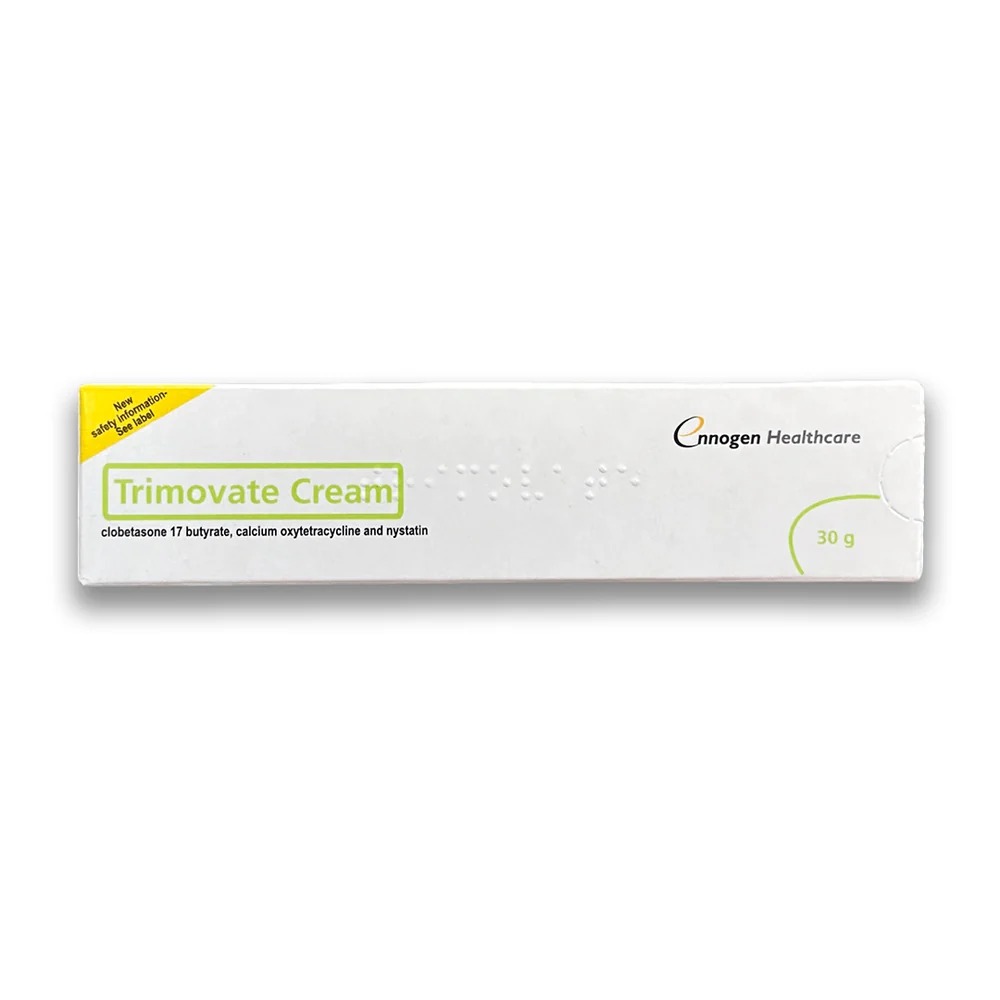
Trimovate Cream is a prescription-only combination treatment used for certain inflamed skin conditions where a bacterial or candidal fungal infection is present, suspected or likely to develop.
It contains three active ingredients that work in different ways:
This combination allows Trimovate to treat inflammation while also addressing certain bacterial and fungal infections affecting the skin.
£26.99

Safe & compliant prescribing

UK-Registered Pharmacy

Quick, hassle-free online consultation

Your data is 100% protected

Next-day UK delivery available

NHS Providing Service since 2020
| Pack Size | 30G |
|---|
What Is Trimovate Cream?
Trimovate Cream is a prescription-only combination treatment used for certain inflammatory skin conditions that are complicated by bacterial or candidal fungal infection.
It contains three active ingredients that work together to address different aspects of the condition:
This combination makes Trimovate suitable for selected skin conditions where inflammation and infection need to be treated at the same time.
What Is Trimovate Used For?
Trimovate may be prescribed for steroid-responsive skin conditions where bacterial or candidal infection is present, suspected or considered likely.
Examples include:
The cream is particularly suitable for moist or weeping areas of affected skin.
How Does Trimovate Work?
Trimovate provides three different types of action in a single cream.
Anti-Inflammatory Action
Clobetasone butyrate is a moderately potent topical corticosteroid. It helps reduce inflammation and symptoms such as:
Antibacterial Action
Oxytetracycline is an antibiotic that works against certain susceptible bacteria that may be contributing to the skin infection.
It does not treat every type of bacteria, so Trimovate should only be used when a healthcare professional considers it appropriate.
Antifungal Action
Nystatin is an antifungal medicine that acts against susceptible fungi and yeasts, including Candida.
Together, these ingredients allow Trimovate to treat both inflammation and certain associated skin infections.
Why Might Trimovate Be Prescribed?
Inflamed or damaged skin can sometimes become more susceptible to infection, particularly in areas where there is:
When infection is contributing to the inflammatory skin condition, using a corticosteroid alone may not be appropriate.
Trimovate combines anti-inflammatory, antibacterial and antifungal medicines in one formulation, allowing these different aspects of the condition to be treated together when clinically indicated.
How Is Trimovate Applied?
Trimovate is normally applied thinly to the affected area once or twice daily.
Treatment should usually continue for no longer than 7 days without medical supervision.
Use only enough cream to cover the affected area and wash your hands after application unless your hands are being treated.
Allow sufficient time for Trimovate to absorb before applying an emollient or moisturiser.
What If My Skin Does Not Improve?
Speak to your doctor or other healthcare professional if:
The diagnosis and treatment may need to be reviewed rather than simply continuing Trimovate for longer.
Important Information
Trimovate should not be used as a general-purpose cream for every type of eczema, dermatitis or skin infection.
Prolonged or repeated use should be avoided unless specifically recommended by a healthcare professional, as this may increase the risk of:
Trimovate can also cause slight staining of the skin, hair or fabrics, although this can usually be removed by washing.
Always use Trimovate exactly as prescribed and read the patient information leaflet supplied with your medicine.
For professional advice about Trimovate Cream, infected eczema, dermatitis, intertrigo or inflammatory skin conditions complicated by infection, speak to a qualified healthcare professional at Chesterfield Delivery Pharmacy.
How Should I Use Trimovate Cream?
Always use Trimovate Cream exactly as prescribed by your doctor, pharmacist or other healthcare professional. Read the patient information leaflet supplied with the medicine before starting treatment.
How to Apply Trimovate Cream
Trimovate is normally applied once or twice daily for up to 7 days.
To use the cream:
Trimovate is for external use on the skin only.
How Long Should I Use Trimovate?
Treatment should normally continue for no longer than 7 days without medical supervision.
Speak to a healthcare professional if:
Your treatment and diagnosis may need to be reviewed rather than simply continuing the cream for longer.
Using Trimovate With Dressings
If your healthcare professional has advised covering the treated area with a dressing:
Warm, moist conditions underneath dressings can encourage bacterial growth, so good hygiene is particularly important.
Using Trimovate With Emollients
If you also use an emollient or moisturiser, allow sufficient time for Trimovate to absorb before applying the other product.
Do not mix or dilute Trimovate with other creams or ointments before application unless specifically advised by a healthcare professional.
Avoid Excessive Use
Do not use Trimovate:
Excessive or prolonged use can increase the risk of corticosteroid-related side effects and may contribute to antimicrobial resistance.
What If I Forget to Apply Trimovate?
If you forget an application, use the cream when you remember and then continue with your normal treatment schedule.
Do not apply extra cream to make up for a missed application.
Important Information
Trimovate combines a corticosteroid, antibiotic and antifungal medicine, so it should only be used for the skin condition for which it has been prescribed.
Do not share your cream with another person, even if their symptoms appear similar.
For professional advice about Trimovate Cream, infected eczema, dermatitis, intertrigo or inflammatory skin conditions complicated by infection, speak to a qualified healthcare professional at Chesterfield Delivery Pharmacy.
What Ingredients Are in Trimovate Cream?
Trimovate Cream contains three active ingredients that work together to treat certain inflamed skin conditions where bacterial or candidal fungal infection is present, suspected or likely.
Active Ingredients
Each gram of Trimovate Cream contains:
Together, these ingredients provide anti-inflammatory, antibacterial and antifungal action within one topical treatment.
Other Ingredients
Trimovate Cream also contains:
These inactive ingredients help form, stabilise and maintain the consistency of the cream.
Important Allergy Information
Trimovate contains cetostearyl alcohol, which may cause local skin reactions such as contact dermatitis in some people.
It also contains chlorocresol, which can cause allergic reactions, and sodium metabisulphite, which may rarely cause severe hypersensitivity reactions or breathing difficulties in susceptible individuals.
Do not use Trimovate if you are allergic to clobetasone butyrate, oxytetracycline, nystatin or any of the other ingredients in the cream.
Paraffin and Fire Safety
Trimovate contains white soft paraffin.
Clothing, bedding and dressings that have come into contact with paraffin-containing creams may burn more easily. Keep treated skin and contaminated fabrics away from cigarettes, naked flames and other sources of ignition.
Check the Patient Information Leaflet
Always read the patient information leaflet supplied with Trimovate before use, particularly if you have known allergies or sensitivities to medicines or skincare ingredients.
For professional advice about Trimovate Cream, its ingredients, infected eczema, dermatitis or inflammatory skin conditions complicated by infection, speak to a qualified healthcare professional at Chesterfield Delivery Pharmacy.
What Are the Side Effects of Trimovate Cream?
Like all medicines, Trimovate Cream can cause side effects, although not everyone will experience them.
Trimovate contains a corticosteroid, antibiotic and antifungal medicine. The risk of unwanted effects can increase if the cream is used for longer than recommended, over large areas of skin or repeatedly without medical supervision.
Possible Side Effects
Side effects associated with Trimovate may include:
Some of these effects are uncommon or have an unknown frequency, meaning it is not possible to estimate how often they occur from the available information.
Allergic Reactions
Trimovate can occasionally cause a hypersensitivity or allergic reaction.
Stop using the cream and seek medical advice if you develop:
Local allergic reactions can sometimes resemble the skin condition being treated, so worsening symptoms should be assessed by a healthcare professional.
Skin Thinning and Effects of Prolonged Use
Trimovate contains clobetasone butyrate, a moderately potent topical corticosteroid.
Using corticosteroid creams excessively or for prolonged periods can increase the risk of:
Trimovate should therefore normally be used for no longer than 7 days without medical supervision.
Effects From Excessive Steroid Absorption
If large amounts of Trimovate are absorbed through the skin, systemic corticosteroid effects may rarely occur.
These can include:
These effects are more likely with prolonged treatment, treatment over large areas or increased absorption through damaged or covered skin.
Topical Steroid Withdrawal Reactions
Long-term or repeated corticosteroid use can occasionally lead to a withdrawal reaction when treatment is stopped.
Possible symptoms include:
If your skin condition returns within days or weeks of stopping Trimovate, speak to a healthcare professional before restarting treatment.
Infection and Antibiotic-Related Effects
Because Trimovate contains an antibiotic and antifungal medicine, prolonged or inappropriate treatment can encourage resistant organisms or other infections to develop.
Seek medical advice if:
Prolonged or significant diarrhoea or abdominal cramps should also be assessed promptly because antibiotic-associated colitis has very rarely been reported with antibiotics, although this is less likely with topical treatment.
Changes to Vision
Blurred vision has been reported with topical corticosteroid treatment.
Speak to a doctor or other healthcare professional if you develop blurred vision or another unexpected change in your eyesight.
When Should I Seek Medical Advice?
Stop using Trimovate and seek professional advice if:
Always use Trimovate exactly as prescribed and read the patient information leaflet supplied with your medicine.
For professional advice about Trimovate Cream, its side effects, infected eczema, dermatitis or inflammatory skin conditions complicated by infection, speak to a qualified healthcare professional at Chesterfield Delivery Pharmacy.
Trimovate Cream contains clobetasone butyrate, oxytetracycline and nystatin, combining a moderately potent corticosteroid with an antibiotic and antifungal medicine.
It should only be used for the skin condition for which it has been prescribed and normally for no longer than 7 days without medical supervision.
Do Not Use Trimovate If:
Trimovate should not be used if you:
A healthcare professional should assess the affected skin before treatment.
Skin Infections
Trimovate is designed for certain steroid-responsive inflammatory skin conditions where bacterial or candidal infection is present, suspected or likely to develop.
However, it is not a general treatment for every skin infection.
If the infection becomes worse, spreads or does not improve during treatment, stop using the cream and seek medical advice. Your diagnosis and treatment may need to be reviewed.
Do Not Use for Longer Than Recommended
Trimovate is normally applied once or twice daily for up to 7 days.
Prolonged, repeated or unnecessary use may:
Always use the smallest amount needed for the shortest appropriate period.
Using Trimovate on Large Areas
Applying Trimovate over large areas of skin for prolonged periods can increase absorption of the corticosteroid into the body.
Extra care is required if the cream is being applied:
If significant absorption occurs, steroid-related effects may become more likely.
Using Trimovate on the Face and Skin Folds
Areas such as the face and skin folds can be more sensitive to the effects of topical corticosteroids.
Long-term or frequent use in these areas can increase the risk of side effects and topical steroid withdrawal reactions.
Use Trimovate on sensitive areas only when specifically advised by your healthcare professional and for the recommended treatment period.
Allergic and Sensitivity Reactions
Extended or repeated use of Trimovate can increase the risk of developing sensitivity to one of its ingredients.
Stop using the cream and seek medical advice if you develop:
Trimovate contains cetostearyl alcohol, which may cause local skin reactions, and chlorocresol, which can cause allergic reactions.
Sunlight and Photosensitivity
Oxytetracycline can occasionally cause increased sensitivity to sunlight.
Avoid unnecessary exposure of the treated area to strong natural or artificial sunlight. Stop treatment and seek advice if you experience unusual skin discomfort or a reaction following sun exposure.
Using Trimovate With Other Medicines
Tell your doctor or pharmacist about any medicines you are currently taking or using on your skin.
Certain medicines that strongly inhibit an enzyme called CYP3A4, including medicines such as ritonavir or itraconazole, can potentially increase systemic exposure to corticosteroids.
Do not dilute Trimovate or mix it with other creams before application unless specifically advised.
Pregnancy
If you are pregnant, think you may be pregnant or are planning a pregnancy, speak to your doctor before using Trimovate.
Trimovate should only be considered during pregnancy when the expected benefit outweighs the potential risk.
If treatment is required, the smallest effective amount should be used for the shortest possible period.
Breastfeeding
The safety of Trimovate during breastfeeding has not been fully established.
If you are breastfeeding, speak to your doctor before using the cream.
Trimovate should not be applied to the breasts while breastfeeding, as this could result in accidental ingestion by the baby.
Topical Steroid Withdrawal
Long-term or repeated use of topical corticosteroids can occasionally lead to a withdrawal reaction after treatment is stopped.
Symptoms may include:
If your condition returns within days or weeks after stopping Trimovate, seek medical advice before restarting treatment.
Fire Safety
Trimovate contains white soft paraffin.
Clothing, bedding and dressings that have been in contact with the cream can burn more easily. Keep treated skin and contaminated fabrics away from cigarettes, naked flames and other sources of ignition.
When Should I Seek Medical Advice?
Speak to a healthcare professional if:
Always use Trimovate exactly as prescribed and read the patient information leaflet supplied with your medicine.
For professional advice about Trimovate Cream, infected eczema, dermatitis, intertrigo or inflammatory skin conditions complicated by infection, speak to a qualified healthcare professional at Chesterfield Delivery Pharmacy.
How Should I Store Trimovate Cream?
Trimovate Cream should be stored correctly to help maintain the quality of the medicine throughout its shelf life.
Storage Instructions
The expiry date refers to the last day of the month shown on the packaging.
Checking Your Trimovate Cream
Do not use Trimovate if the product has passed its expiry date.
If the tube is damaged, the cream appears noticeably different from when it was supplied, or you are unsure whether it has been stored correctly, speak to a pharmacist before using it.
How Should I Dispose of Unused Trimovate?
Do not dispose of unused or expired Trimovate Cream through household wastewater or normal household waste.
Take unwanted medicines to a pharmacy and ask how they should be disposed of safely. Appropriate disposal helps protect the environment.
Important Information
Always follow the storage instructions printed on the packaging and in the patient information leaflet supplied with your medicine.
For professional advice about Trimovate Cream, medicine storage or safe disposal of prescription treatments, speak to a qualified healthcare professional at Chesterfield Delivery Pharmacy.






This website sells age-restricted products. Please confirm you are 18 years of age or older to continue.
Sorry, you must be 18 years or older to access this website.
Leave Site
Reviews
There are no reviews yet.